
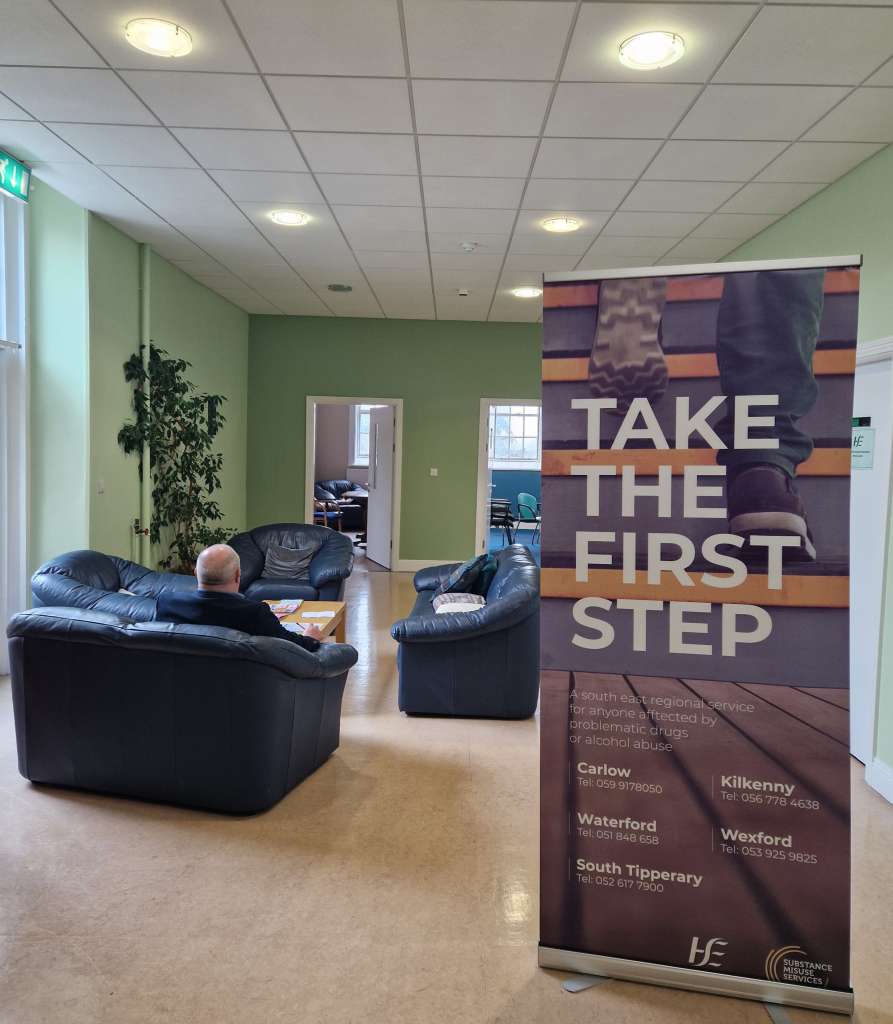
There is hope for people dealing with substance misuse – that was the message from John Devlin, co-ordinator of the HSE Substance Misuse Clinic in Waterford, who generously gave his time to discuss the clinic’s work and services with The Munster Express.
With the latest Health Research Board publications citing troubling statistics like a 426% increase in women seeking help for cocaine use between 2017 and 2024, a history of substance misuse in 86% of homeless deaths, and an increase in those seeking treatment for alcohol misuse between 2023 and 2024, substance misuse is an issue impacting every community in Waterford and Ireland.
Working against the tide of social issues caused by substance misuse, there are clinics with dedicated professionals available to anyone who may need them.
John Devlin is the co-ordinator of one such clinic, located in St. Otteran's Hospital, John's Hill, Waterford.
John has worked in substance misuse services in community and clinical settings for more than 18 years.
He began his career in community services before moving into the HSE. John comes to substance misuse from a background in social care and counselling and explains that he has a particular interest in social inclusion for marginalised groups who may have difficulty accessing services.
Would you see people with substance issues as a marginalised group?
“It would be individual to individual, but they could be in cases,” said John.
“Addiction can impact anybody of any age or background, it’s right across the board. It doesn’t discriminate.”
Is stigma something that can stand in the way of recovery?
“Yes, there is that as well. People come and they might feel challenged, or have pre-contemplation or feel nervous about comping here, or feel shame. But we are very much person-centred and trauma informed. We are here to provide a non-judgemental, safe space, and a collaborative space for people so we can work together,” he said.
Is there a link between trauma and substance misuse?
“Research would suggest there is, but again it does depend on the individual.”
What is the main problem drug for people in Waterford?
“People present here for alcohol, cocaine, cannabis, benzodiazepines, opiates. Those would be primary substances that people present with.”
Are some substances more problematic than others to treat?
“No, because there is a different model for each. The person presents, we would provide an initial assessment where would gather information and then the appropriate intervention would be put in place according to the information provided,” said John.
“Even though the substance might be the same for two or three people, their experiences of that will be different and their experiences of recovery may also be different as well.”
And is that model based on the substance or based on the person?
“We are a person-centred service, so we have different models of care for harm reduction, for abstinence, for OAT [opiate agonist treatment], it would depend on the person and their needs. It would generally depend on the individual and their presenting issues.”
Is there such thing as somebody who is too far gone, that couldn’t turn it around?
“That would be individual, case-by-case, in terms of how you measure turn it around. Someone may come seeking harm reduction, they may be seeking counselling, they may be seeking clinical intervention, that’s how we would generally view it.”
It seems people are drinking less. Is that reflected in the services here?
“No. Alcohol would still be a prominent substance here for treatment,” John replied.
“Alcohol would have a major impact on people, and on families as well. It is important to discuss the impacts it has on the individual, the family, and also on the wider community in some cases.
“We have a multi-disciplinary team here, which is made up of substance misuse nurses, GPs, counsellors, outreach workers, and community based drugs workers as well.”
Could one case involve all of those disciplines?
“It would really depend on the individual, but yes, there could be a care team. Depending on whatever the presenting issue is that would be discussed and there would a care plan put in place for people.”
With each person there are individual goals, but are there general goals too?
“The big thing we’re here to do is offer people hope and a feeling that they have a service, and a safe non-judgemental space that they can come to and discuss what’s going on with them,” said John.
“We are a health and wellbeing service as well so we are here to have impacts on people’s health, help improve their health, as well as their general well-being as well.”
Is there an end to recovery, or is it a lifelong thing?
“I suppose you would have to talk to the individual, but recovery is ongoing. A lot of people take recover as day-to-day and I think a big part of our work here is to try and keep people in treatment and give them the supports so they can maintain their recovery,” John said.
“One of the reoccurring messages being, the substance misuse clinic is here to help, whether you are experiencing issues of substance misuse, or you are concerned that somebody in your family is experiencing substance misuse, the HSE has a team of experienced professionals with multiple areas of expertise, that will work towards a better life for the individual concerned, whatever that may look like.”
How would somebody reading this access help for themselves or a loved one?
“They can self-refer here – our phone number is 051-848658.
“Also, just to highlight, family members can contact us as well and they can avail of supports. As I said earlier substance misuse can impact the wider family also. Family members may need some education, awareness, or supports in how they manage that themselves. There is also the family support network here in Waterford also.
“There are clinics in Waterford and Dungarvan, along with multiple community-based drugs initiatives across the county for those seeking to access drug and alcohol support services.
“People can get referred from a GP, they can self-refer, the clinic accepts referrals from all statutory and community agencies.”
Do patients who self-refer for treatment tend to engage better?
“We meet people where they are. Our goal is to motivate people to become involved in treatment when they present. We want people to feel included, motivated and have access to treatment. We are here to support people.”
John was also keen to emphasis education and awareness as a primary resource in dealing with substance misuse, as it allows those affected to make rational, informed decisions based on the real circumstances of the situation.
“If anybody is out there and feels isolated or anything like that, there are supports available,” said John.
“Anybody who is seeking any kind of information can contact us, but Drugs.ie is also a very good website, very informative, and there’s are a lot of resources and information on that for people.
“We do have digital platforms as well. There is a cocaine specific digital platform [SECAS Cocaine Support], there is a primary alcohol service and there is an adolescent service. People can access digital platforms or come in here in person.”
In closing the discussion, John had some final comments for anybody who may need help.
“The service is here, very much so,” he explained. “If anybody has any support needs feel free to pick up the phone.
“We’ve had plenty of people who come through treatment and do well and maintain abstinence and go on to live good, fulfilled lives and their health and well-being improves.
“People might come back every now and again or give you a call just to say thank you. There is a lot of that. It’s important that good news stories get out there.
“A lot of people see substance misuse as a negative thing, but it is a very real thing,” John added.
AARON KENT
Funded by the Local Democracy Reporting Scheme
