
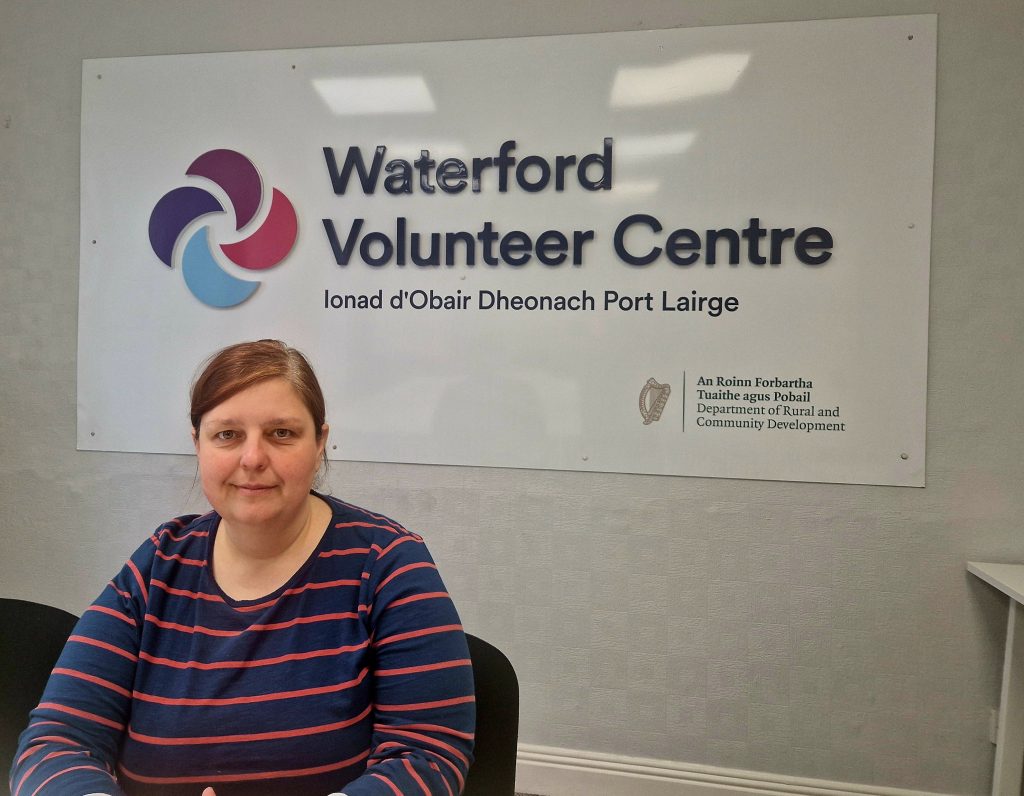
For many, volunteering might sound like something a teenager does in the summer to enhance their CV, and maybe they do, but the reality is there are organised networks of volunteers of all ages across Ireland, engaging in many levels of activities from litter picking to acting on boards of management in community organisations.
Although much of society benefits from and relies on the unpaid efforts of volunteers, many may not realise how diverse and widespread volunteering actually is.
Whether it’s coaching, teaching, public cleaning, painting community centres, tending neighbourhood flower beds, or so much more, the unpaid effort of volunteers helps to make our communities a better place.
Although some do, many volunteers do not find their way into a meaningful role by accident. The Waterford Volunteer Centre exists as a matchmaker between volunteers and the organisations who could benefit from their skills and time.
The Munster Express sat down with Manager of Waterford’s Volunteer Centre, Réka Széplaki, to learn about the centre and understand the role that volunteering plays in Waterford.
Ireland is a leader in volunteering
It may surprise some to learn that Réka, before moving here, admired Ireland’s volunteer network, which she says is a leader in Europe.
“I am working with volunteers for more than 20 years on an international level. I saw a call that the Volunteer Centre was looking for a manager, so I applied and I got it,” she explained.
“When I worked in Hungary we learned a lot from Ireland. In Ireland we are in this really fortunate position that we have the network of volunteer centres. This is not totally unique, but a good position in the whole of Europe. The whole of Europe is looking to Ireland about volunteering,” she said.
“I was so happy to finally end up working with the regional project here in Ireland. Ireland is one of the leaders in volunteering. I think it is a really big asset for the country which should be protected.”
When asked why she thinks volunteering has developed naturally in Ireland, she explained that the Ireland benefits from a communal culture and traditions.
“I think in Ireland it [volunteering] was always there. I believe there is an Irish expression meitheal to describe when people come together and help each other. So, it has always existed,” Réka told The Munster Express.
“I think in Ireland there is a really strong culture of helping each other. If you are required by somebody to give a hand, then most probably you will go and give them help,” she explained.
“I think this is a really big legacy and tradition for the country.
“A lot of people don’t realise that they are volunteering because they are just helping out a friend, or helping out in a club, they are helping by diverting traffic at a funeral. They are volunteering, but they might not call it that.”
Not free labour
Réka also drew a clear distinction between volunteering and free labour. She explained that the Volunteer Centre didn’t simply matchmake between volunteers and organisations, they also work to improve the quality of the experience on both sides.
The Volunteer Centre even turns away organisations if they do not meet certain criteria or are not willing to have a certain structure around the role of the volunteer.
“We give consultation training for both of the sides, we support communities and organisations, in how to offer a good volunteering,” she continued.
“If you are an organisation and you would like volunteers in your organisation you can come to us and we will help you develop the procedures and volunteers’ policy in your organisation. We will try to support you to define the roles, decide what roles can be done by volunteers, the garda vetting processes and so on.
“But it’s not free labour—that’s really important. If we have a feeling that an organisation is just looking for free labour, then we will not recruit for that organisation,” she explained.
“There needs to be a system, a structure, because we need to ensure both sides are safe. We have turned down organisations that request volunteers. We have a requirement list.
“Usually organisations will have to be non-profit. They often have charitable status but this is not a must, we also support community groups. If it is commercial, a festival or something like that, then the role has to be a clear community focus, it has to clearly benefit the community.
“These are just the basic requirements; I won’t bore you with the rest. We also refer volunteers but the organisation always has the final decision,” Réka added.
When asked who gets more from volunteering, the volunteers themselves or the groups they help, Reka replied: “There is a third party: the communities.”
“The communities get the best of it,” she laughed.
“Both the organisations and the volunteers are working for the communities towards different goals or causes. Service users are a good example,” she said.
“Both volunteers and organisations put a lot into it. Hosting volunteers in your organisation is not just happiness and sunshine. It is not just health and safety, you have to have a volunteer co-ordinator for them, you have to take care of these people because you are responsible for the volunteers you are hosting.
“This is not employment but you still have to have the responsibility towards it. It’s actually a lot of work because it is really beneficial for the organisations, because they can get extra skills, extra hands, for good causes and that can give them a better connection with the local communities, because often members of that community work with them as volunteers,” said Réka.
Why volunteer?
Recently, the Volunteer Centre launched a booklet filled with personal stories from volunteers in Waterford, many of whom say volunteering is an integral and hugely beneficial part of their lives. As Réka explained, by very nature volunteering takes time and effort, so why do people do it, and how does it seem to benefit them?
Much of the answers to these questions come back to purpose: volunteering gives people a reason to be out in the community, a way of using their skills, allows them to be helpful, and give them a job to do with like-minded people.
“Integration is really important,” explained Réka. “It is a little bit funny if we talk about integration we can talk about migrants but also we can talk about people who are just coming from the other side of Ireland.
“Even in Waterford we have the City and then we have the big rural part, and if you arrive as a newcomer from anywhere in the world you can feel really alone and people can stand back a little bit from you, because they don’t know you, so volunteering is a really great type of integration on that level.”
Réka continued: “With volunteering you go, you show that you exist and that you are happy to help the community. That all really helps for you to make these basic contacts.”
With such extensive experience in the sector, Réka has seen volunteers begin for a wide variety of reasons. She also emphasised that age is no barrier to becoming involved in your community.
“For the volunteers there are many different motivations. Some of them do it because the organisation’s value match with their values and they would like to work with them,” she said.
“Some people like to give back something to their own community because they received so much. Some people use volunteering to build their career paths. For example, an adult will get great experience to build-out their CV, which means they can have experience which they wouldn’t get another way, and build up connections.
“Volunteering is also a way of skill development, but sometimes people just want to get out from their houses,” she continued.
“Maybe it’s people who work in home offices, or people who are just freshly retired, or they have been retired for a long time, it is a good way to find a new purpose and to get out and meet people.
“So, they give the time and the skills but they also gain a lot,” Réka added.
The Waterford Volunteer Centre is located on 21 O’Connell Street, Waterford and can be contacted on 051 870 698.
AARON KENT
