
Waterford City and County Council have received a staggering 1,155 reports / complaints relating to animals this year. 1,081 of these relate to dogs, with the other 74 relating to horses.
Figures which cover January to July show that there were also 64 dogs rehomed, both public and private, 39 dogs that were reclaimed by their owners and two dogs were euthanised, an XL Bully and one in the care of a vet.
Again, covering January to July, the Council seized 20 horses and rehomed 18. A further eight were reclaimed by their owners and seven were euthanised.
The rate of euthanasia is much higher with horses, as 9% of all horses seized were ultimately euthanised, according to these figures.
REALITY BEHIND THE FIGURES
To try and understand the dynamic of Animal Control in the City, The Munster Express reached out to Council’s Environmental Services. Senior Executive Officer, Dawn Wallace responded.
The first element she addressed was the more than 1,000 dog complaints / reports. Ms Wallace explains that these reports cover a wide variety of issues, ranging from serious to relatively minor.
“The complaints received by the Dog Control Service arise from a wide variety of matters and are not solely related to enforcement issues,” Ms. Wallace told this newspaper. “These include reports of lost and stray dogs, requests from members of the public seeking to rehome dogs, dog fouling complaints, concerns regarding dog welfare, reports of deceased dogs, and other general dog control matters.”
In relation to the dogs being euthanised, Ms. Wallace explained that this is an absolute last resort but it does happen when euthanasia is considered the most humane option or when the dog poses a threat to the public or other animals. The council may also euthanise an XL Bully dog which does not have an exemption certificate.
“Under Waterford City & County Council’s Euthanasia Policy, euthanasia is considered only as a measure of last resort and may be carried out where a dog presents a significant risk to public safety or other animals, is suffering from a serious illness or injury where euthanasia is deemed the most humane option by a veterinary practitioner, where a Court directs destruction under the Control of Dogs Act 1986, or where required under the Control of Dogs (XL Bully) Regulations 2024,” she said.
More disturbing is the ‘exceptional circumstances’ when dogs may be euthanised if the dog pound is full, and all possible effort to rehome or transfer the dog have been unsuccessful.
“In exceptional circumstances, where the dog pound has reached capacity and all reasonable efforts to rehome or transfer a dog have been exhausted, euthanasia may also be considered where no viable alternative exists. Decisions are made in accordance with legislative requirements, veterinary advice, and the Council’s commitment to animal welfare.”
Waterford City and County Dog pound operates a Facebook where they appeal for dogs to be rehomed or returned to their owners.
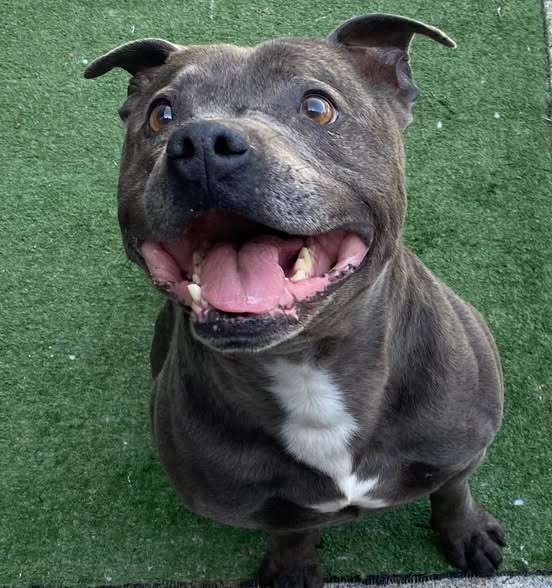
A post from this week explains that their longest resident is Marley, an 8-year-old Staff.
As they work hard to get him rehomed they said: “Don’t let his last days be in a pound environment. Happiest when by your side, loves chasing tennis balls, experience in the breed a must. Restricted Breed legislation applies. Marley will qualify for the neutering scheme”.
XL BULLY
Figures released by Waterford Council show that one of the two dogs euthanised this year were from the XL Bully breed.
The XL Bully breed became illegal to import, breed, sell or rehome in Ireland in October 2024. In February 2025 it became illegal to have an existing XL Bully without a Certificate of Exemption provided by the Council.
These strict laws came into force after a number of high profile attacks, including fatal attack on 23-year-old Nicole Morey in Limerick, who died as a result of injuries inflicted by her own dog.
According to the Control of Dogs (XL) Bully regulations, from 1 February 2025, a dog warden can seize, detain, and humanely destroy an XL Bully breed which do not have a certificate of exemption.
Interestingly, Dog’s Trust Ireland, Irish Blue Cross, MADRA, and the ISPCA released a joint statement suggesting the evidence does support dog bans to improve safety, and efforts should instead by focussed on addressing the causes of aggression in these dogs.
“While decisive action is crucial to preventing further dog control incidents and protecting public safety, we remain deeply concerned about the effectiveness of this breed-based ban of XL Bully-type dogs in Ireland,” the joint statement said.
“There is consistent evidence that breed bans fail to reduce the number of dog bite incidents and instead present significant challenges for dog owners and the animal welfare sector. We have continued to reiterate these views as members of the Stakeholder Group on Dog Control.
“We urge the government to now prioritise enforcing and adequately funding laws that address the root causes of dog aggression across all breeds and types of dog. This includes tackling unscrupulous breeders, penalising irresponsible owners of dangerously out-of-control dogs, and educating and empowering responsible dog owners,” the joint statement added.
Waterford Council are obliged to follow the legislation as outlined by the government and have no authority to create their own rules regarding the XL Bully breed.
HORSES
Horses are an ongoing issue for Waterford Council. There have been multiple calls during recent council meetings to ban Sulky Racing outright.
While the council do not have the authority to do this, they did draft new horse by-laws over the summer. Under these new regulations, all horses would require a horse licence, and horses can be seized by the council and held in an undisclosed location.
Ms. Wallace explained that the Council keeps seized horses for five days. After this, when all efforts to rehome the horse have been made, euthanasia may be considered due to the substantial costs required to keep a horse in good health and humane conditions.
“With regard to horses, the Council’s actions are governed by the Control of Horses Act 1996. Under the legislation, horses that are seized must be detained for a minimum period of five days to allow owners an opportunity to reclaim them,” she said. “During this period, the Council’s contractor makes every effort to reunite horses with their owners or secure suitable rehoming arrangements where appropriate.
“Where horses are not reclaimed and suitable homes cannot be found, significant ongoing costs are incurred in relation to feeding, housing, transportation, veterinary care, and welfare management. In circumstances where all reasonable efforts to rehome a horse have been exhausted, or where a veterinary assessment determines that the animal is suffering from illness, injury, or poor welfare and euthanasia is in its best interests, euthanasia may be considered.”
Ms. Wallace concluded by highlighting that the vast majority of animals are reclaimed and rehomed.
“The work of both the Dog Warden Service and Horse Control Service is focused on animal welfare, public safety, responsible ownership, and the reunification of animals with their owners wherever possible,” she said.
“The overwhelming majority of animals that come into the care of our services are reclaimed, rehomed, or otherwise dealt with without the need for euthanasia.”
AARON KENT

Funded by the Local Democracy Reporting Scheme
