
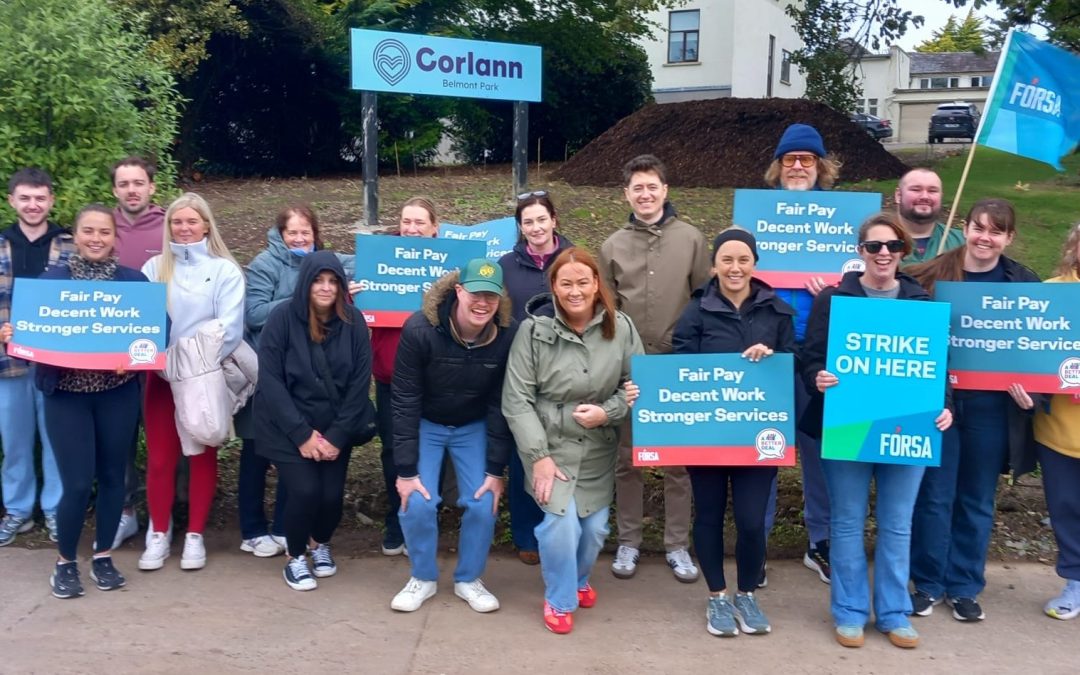
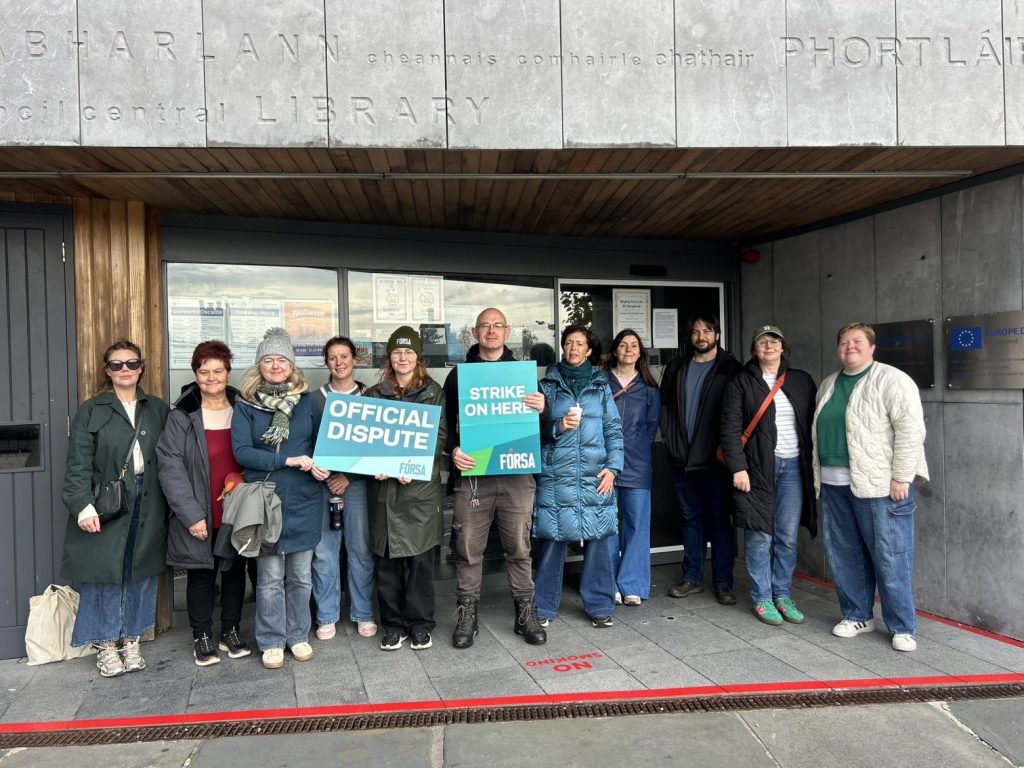
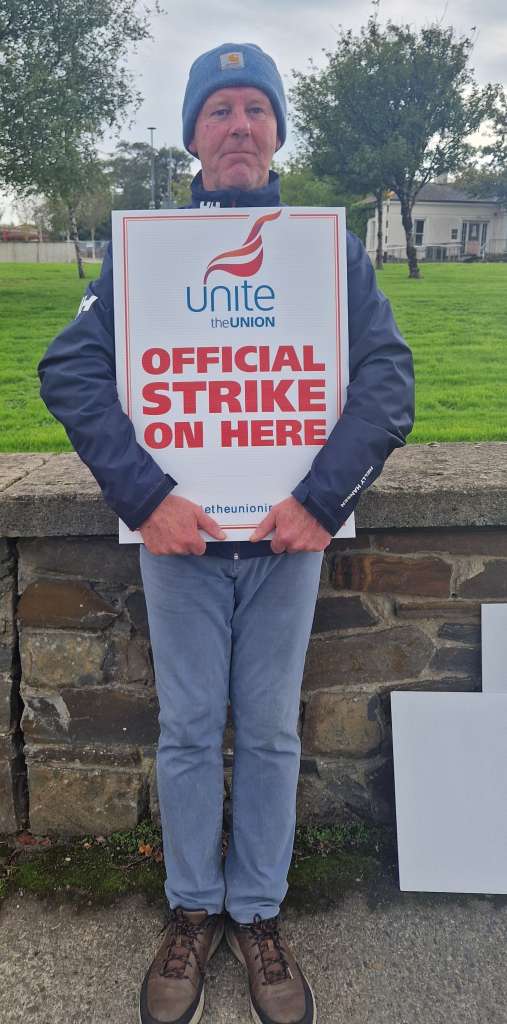
Across Ireland, more than 300,000 went on strike outside their workplace on October 14. Many of the picket lines formed for multiple hours. A major action, comprised of multiple unions, was seen outside UHW where The Munster Express met Waterford Council of Trade Unions President Dean McGrath.
“Public sector workers have come to the point where they need a pay deal,” he explained to The Munster Express. “One that actually addresses all of the cost of living measures. For a number of years, inflation has run rampant
“Nurses, social workers, whether it be SNAs, or our colleagues in the psychiatric, this is across the entire public sector who need a fair deal.”
“We don’t want to be out here. We want to negotiate…I’m hoping for a positive outcome but we stand absolutely ready to take industrial action as needs to be done for use to get that outcome.”
“We are very sorry for any disruption we are causing, but what else are we to do? Are we to beg? We tried talking. The government are not budging. We need them to hear us—and this is how they will hear us.”
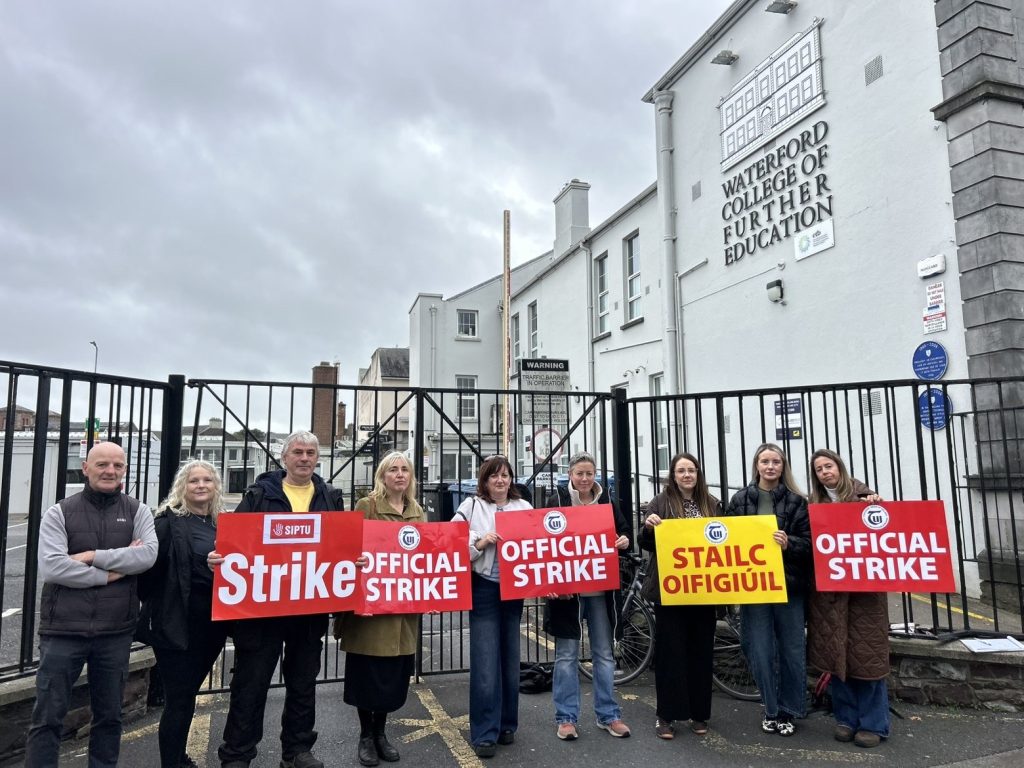
TEACHERS
Teachers made up a substantial proportion of the strikers, as schools across the country shut their doors for one day as their staff pushed for a better pay deal.
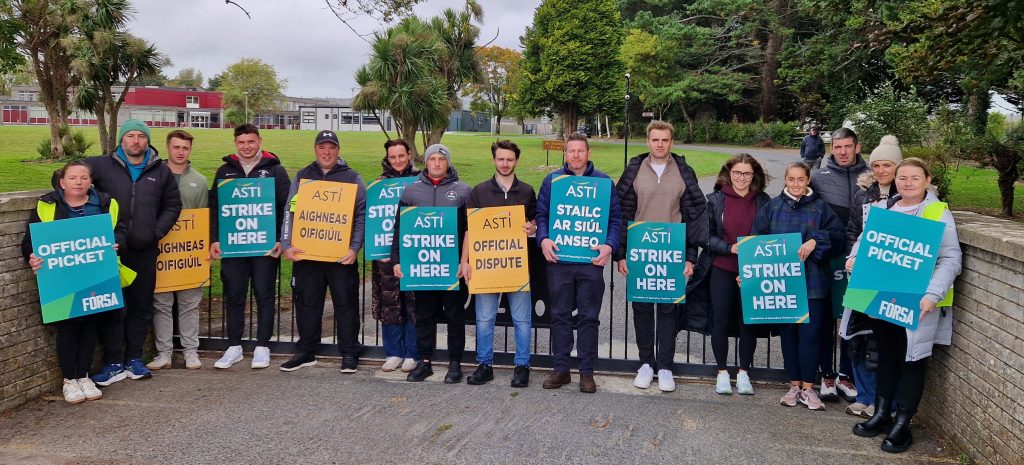
St. Augustine’s College, Duckspool, Abbeyside, Dungarvan, has strong unity as every single teacher, management and PME are all members of the union, ASDI.
School Steward and ASTI member at St. Augustine’s College, Pat Knightly, speaking to The Munster Express at the picket line outside the school, said that if the government agrees to go into pay talks that will address the cost of living, then talks will take place with the unions.
“But they’re not willing to do that,” said Pat, who added that the unions want pay talks that will deal with the cost of living.
“In the last number of years, we’re running 7.5% behind with inflation – cumulative, if you bring it all the way along,” he said.
Pat said that this year, there was a two percent pay rise, but inflation is running at 4.1 percent, “so, we’re losing over two percent this year. It’s not just teachers, it’s right across the public service”.
“So basically, the government and the minister really have to stop being so arrogant. They have to really come to the table meaningfully, saying that they’ll address these issues.”
Pat said the public service “just have enough of it” and pointed out that every public service union had over a 90 percent mandate for strike action.
“95% of the teachers, ASDI, voted to come out on industrial action; SIPTU – 98%; INTO were up around 90% level. You don’t have mandates like that too often,” said Pat.
Pat said there is more strike action planned for Wednesday, 21 October, but indicated that may not go ahead if the unions hear the right formula of words from the government that they will go into talks which will also address the cost of living issues.
“Unless they [government] come up with something meaningful, that won’t happen,” said Pat.
STRIKE SUSPENDED
Following discussions between representatives of the Government and the Irish Congress of Trade Unions, Mr Kevin Foley, Ms Oonagh Buckley and Mr Owen Reidy were appointed to pursue formal negotiations at the Workplace Relations Commission.
“I hope that this initiative we are taking will allow for all sides to move forward together into meaningful negotiation and ultimately to a successful conclusion,” said Taoiseach Micheál Martin.
He also acknowledged that public sector workers “are the backbone of our healthcare, social care, education and so many other sectors.”
In reply, Irish trade Unions made the decision to suspend the strike scheduled for this coming Wednesday, October 21. In a statement, Fórsa, who represent over 100,000 public sector workers in 7,000 workplaces, said
“Following a report from the Officers of the ICTU Public Services Committee on discussions with Government representatives over the last 24 hours, a meeting of the 19 unions affiliated to the ICTU PSC has agreed to suspend strike action due to take place next Wednesday.
“PSC Chair, Kevin Callinan, said that the Government has agreed to appoint an independent third party, Kevin Foley, to conduct an intensive and focused exercise aimed at constructing a basis for formal negotiations at the Workplace Relations Commission (WRC). Mr. Foley will be assisted by one trade union and one employer nominee. It is understood that the process may get underway as soon as tomorrow morning.
“Mr. Callinan said that the Taoiseach had come out of a meeting of the European Council in Brussels to telephone him to indicate his commitment to the process that had been developed following engagement between the union and employer sides.
“Mr. Callinan went on to say that following his conversation with the Taoiseach he believed that there was a desire on the part of the Government to reach a public service agreement quickly and an end to the current dispute. He said that this would now need to be demonstrated in practice.
“While the strike action on Wednesday has been suspended, work-to-rule action will continue.”
Work-to-rule action means public sector employees will only complete the duties outlined in the contracts, and will not do the additional, often unpaid, labour associated with their role. Teachers coming to school before their workday starts would be common example of those in the public sector doing work in excess to what their contract requires.
AARON KENT
Funded by the Local Democracy Reporting Scheme
