
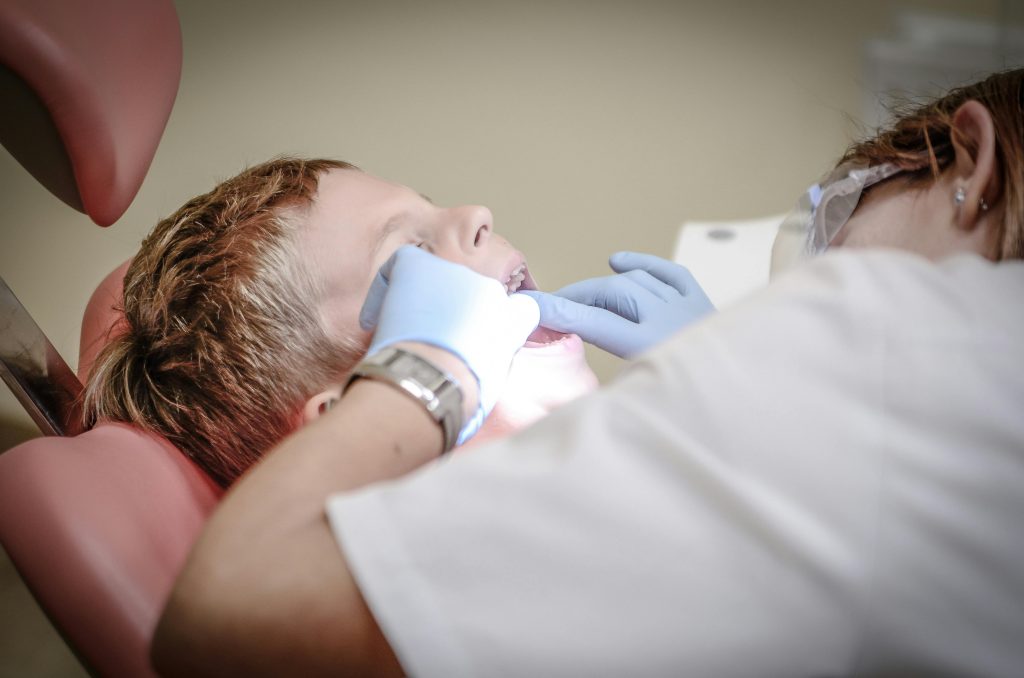
The Munster Express met with TD David Cullinane and Councillor Joeanne Bailey recently, to discuss the issue of delayed dental treatment for children in Waterford City.
HSE Figures released to TD Cullinane on January 15 show that there are 3,800 children from second and sixth class on the waiting list for dental treatment in Waterford, with a current waiting time of approximately 54 months.
This means that children may be in secondary school before receiving their second class screening.
Cllr Bailey brought a successful motion to Waterford Council’s Plenary meeting for March, requesting the Chief Executive write to the Minister of Health and ask that the situation be addressed immediately.
COMMITMENTS
Government policy documents make clear commitments regarding the oral health of children. Smile agus Slainte, the current national policy for oral health, states: “Primary oral healthcare services for children aged under 16 years and medical card holders (including all vulnerable persons) will be provided by local dentists and their teams. Prevention is foremost in all oral healthcare service provision.”
“… Eight oral healthcare packages will be available for children up to the age of 16 years from their local dentist. These will focus on prevention and primary care, e.g. examinations, fissure sealants, fillings and extractions.”
Official policy also intends to provide parents with the option to change dental providers and to be involved with the decision making process of the treatments: “Parents and guardians will be able to choose a dentist and change to another dentist should they wish to do so, following delivery of each oral healthcare package for their child.
“Parents and guardians will be able to determine, in conjunction with the dentist, when and how they want each oral healthcare package delivered for each child.”
THE REALITY
Although these policies give clear commitments to a timely and collaborative approach to the oral health of children in Ireland, the lived reality is starkly different.
The Munster Express spoke with parents across Waterford to understand how dental care, or the lack of it, is impacting Waterford families. Some names have been altered on the request of those involved.
“There is effectively zero public care in this country,” said Leah, a mother from Waterford.
After finding that timely public service was effectively non-existent in Ireland, Leah was forced to go private but found no simple answers.
Following a string of bad experiences with private providers, including having to follow a complaint procedure to get a deposit returned after an expensive treatment, being told breast-feeding had caused her children’s oral issues, and having a dentist refuse her child service because they previously consulted with another local dentist, Leah is considering leaving the country to get her children the care they need.
“I’m thinking about going to Wales just to get it sorted, but then I would have to pay for accommodation and all the rest. I’m actually worn out with it,” she said.
Having to travel outside Ireland for adequate dental care was a common theme that arose in these conversations between Waterford parents and The Munster Express.
Marie told The Munster Express that she spent some of her childhood in Britain, and has friends there whose children attend free dental appointments every six months since they were two years old.
“Here, they get one appointment and that’s it until they are almost 13, its ridiculous,” said Marie.
Marie explained that she has three children, one in primary school and two in the early stages of secondary school.
“My daughter who is in 6th class hasn’t been seen yet. My daughter in first year was seen in December and brought back in January for fisher seals on her teeth. We already paid for fisher seals previously when she was younger, but these were adult molars.
“My eldest was seen at very end of sixth class, they also got fisher seals to replace ones that had worn away.”
With such long waiting lists, it is common that children age-out of their entitlements, meaning parents often pick up the bill for treatments that may have been subsidised for issues that could have been avoided.
“All three of my children have or have had braces,” continued Marie. “At least two of them would have qualified for free braces, possibly all three.
“We are paying a total of €14,000 for their braces.”
Sarah, a Kilmacthomas resident, explained how treatment of her child effectively ended with her being told of a five year waiting list.
“My child got their first screening [the second class screening] just before sixth class in 2024,” she said.
“We were told they had an impacted tooth. We received a referral to an orthodontist four months later. We were told then there was a five year waiting list in Waterford.
“She basically just said she won’t see us again for five years because there was no service available,” added Sarah.
BREAKDOWN
The Munster Express sat down with TD David Cullinane and Councillor Joeanne Bailey to discuss these individual cases.
“Many of the cases we got back were identified as Grade 4 Grade 5, the urgent cases, children in pain who need treatment,” said TD Cullinane. “And yet they can be waiting four years or more for braces and all sorts of issues.
“As you can imagine if it was your child, the family just go and try get it addressed privately, if they can afford it and if they can borrow the money they will do it. I spoke to a number of parents over the last few weeks who gave me that experience.”
It was highlighted that those from the South East find themselves at a disadvantage when seeking treatment.
“Technically you are entitled to free dental treatment, but the problem is the majority of dentists have left the scheme because the government cut the fees to dentists. In reality, a lot of families simply can’t get it. There is only a small number of dentists providing that service,” Deputy Cullinane continued.
“It’s a post code lottery, in some areas, in some schools where they might have better resources they do [receive screening] in the South East; unfortunately it comes back to we don’t have the orthodontists, we don’t have the dentists, they are not rolling them out so some children never get it.”
TD Cullinane was asked how a problem of this scale could be addressed.
“We are calling for more public dentistry. That’s what we all signed up to in Sláintecare, which was meant to be a free at the point of delivery, public health service, more in-sourcing, less out-sourcing,” explained Deputy Cullinane.
“Rather than spending billions of euros in outsourcing care to the private sector we have to build the capacity in the public sector and that would mean equality of access for patients rather than it being dependent on whether you have private health insurance or how much money you have, which is unfair.”
IRISH DENTAL ASSOCIATION
In response to The Munster Express, The Irish Dental Association has acknowledged that the public Dental Treatment Services Scheme, has “collapsed” and the school screening programme has “deteriorated sharply.”
The Association explain that dentists are ‘uncomfortable’ with the treatments they are required to provide as part of the Dental Treatment Services Scheme and should not have to occur losses for their services.
The Dental Association has, it claimed, suggested solutions including vouchers and night-time clinics, but formal negotiations on a new scheme were ended by the Department of Health as far back as 2008.
A spokesperson for the Irish Dental Association stated: “The Irish Dental Association has repeatedly emphasised that the Dental Treatment Services Scheme, also known as the Medical Card Scheme, is in a state of crisis and is no longer fit for purpose. Active participation by dentists has collapsed and fewer than 600 dentists operate under the scheme compared to 1,400 in 2012 and over 1,600 in 2016. This is despite an increase in eligible patients of 130,000 to 1.61 million people who can avail of treatment”.
“Dentists across Ireland have exited the scheme due to restrictions on treatments available to Medical Card patients, restrictions on the materials they can use, administrative burdens and fees which are considerably below the cost of delivering these treatments.
“Our members want to treat patients in need, but should not incur a loss for doing so. Many of our members are also uncomfortable performing dental extractions, when there are a range of modern restorative treatments available that are more clinically appropriate.
“The Irish Dental Association has proposed a voucher-based model to allow for a wider range of modern, clinically appropriate treatments and interim measures such as evening clinics in HSE facilities, but formal negotiations on a new scheme were ended as far back as 2008 by the Department of Health.
“The backlog in checks for children in Waterford reflects a trend we have seen throughout the country, where eligible children do not receive the care they are entitled to. The HSE school screening programme, once a flagship of preventive care, has deteriorated sharply.
“Many children are seen only once during the eligible period, and there are parts of the country where they are not seen at all in primary school. In 2023, fewer than 104,000 children were screened, compared with 152,000 in 2018. We estimate there is currently an eligible cohort of 200,000, meaning that only roughly 50% of the children who should be screened in any year are screened across the country. This is detrimental to lifetime oral health outcomes and represents a failure in care,” added the spokesperson for the Irish Dental Association.
AARON KENT
Funded by the Local Democracy Reporting Scheme
