
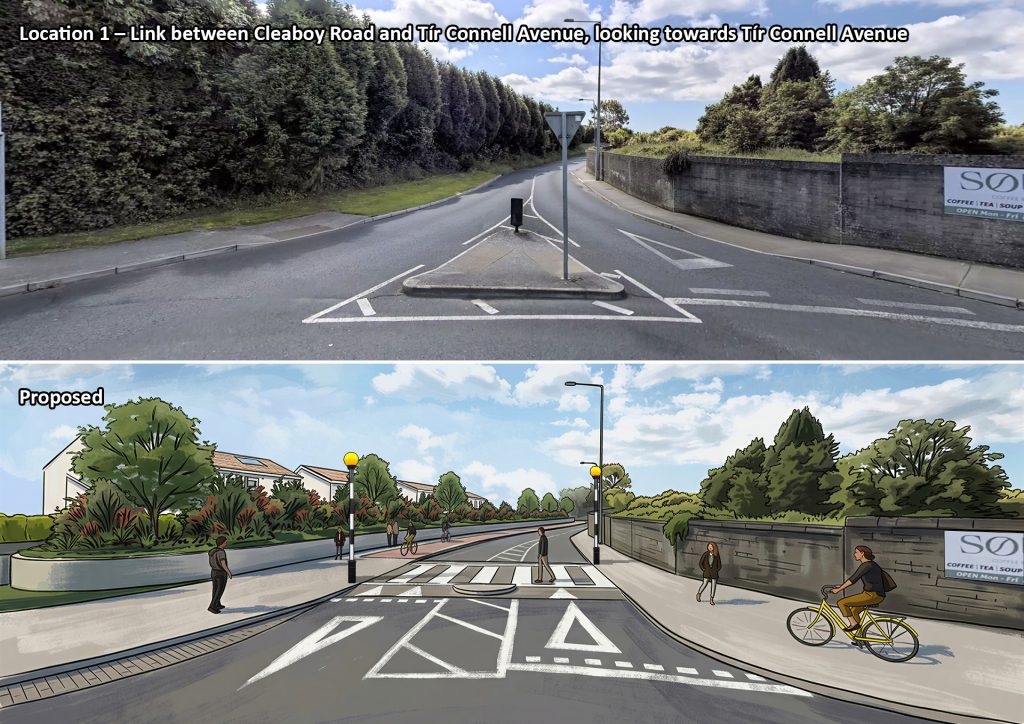
The proposed Lismore Park, Lisduggan and Larchville Active Travel scheme is facing resistance from locals who are strongly opposed to the proposed changes to their neighbourhood.
The public consultation opened recently and, as with most Active Travel projects, the Accessible Neighbourhood Project is facing serious opposition from residents who live in the area.
Among the reasons for these objections, a significant number of trees will have to be removed in order to facilitate the changes.
CHANGES
If the proposed changes go ahead some households will have double cycle lanes directly outside their driveways; green areas will be partitioned by walkways, and new pathways and benches have given rise to fears about ant-social behaviour returning to the area, which, after some historic problems, is now said to be quiet and peaceful.
Speaking to The Munster Express, Cllr. John Hearne, said he welcomes the €14m of investment into the area.
“I look forward to seeing the revised plan once everyone has had their say,” he explained.
The Lismore Park, Lisduggan, Larchville : Accessible Neighbourhood Project is a huge project intended to modernise the public infrastructure in the area, which was found to be substandard due to “excessively wide junction geometries” which make it difficult to cross roads, no cycle-lanes, poor footpaths, no infrastructure one routes walkers use along ‘desire-lines’, and disconnected areas for work, education and home, force people to take longer, less direct travel along the main roads.
The new project will encompass a massive 82 hectares of footpaths, pedestrian crossings, new routes between existing places (like SETU and Lisduggan shopping centres and double cycle-lanes).
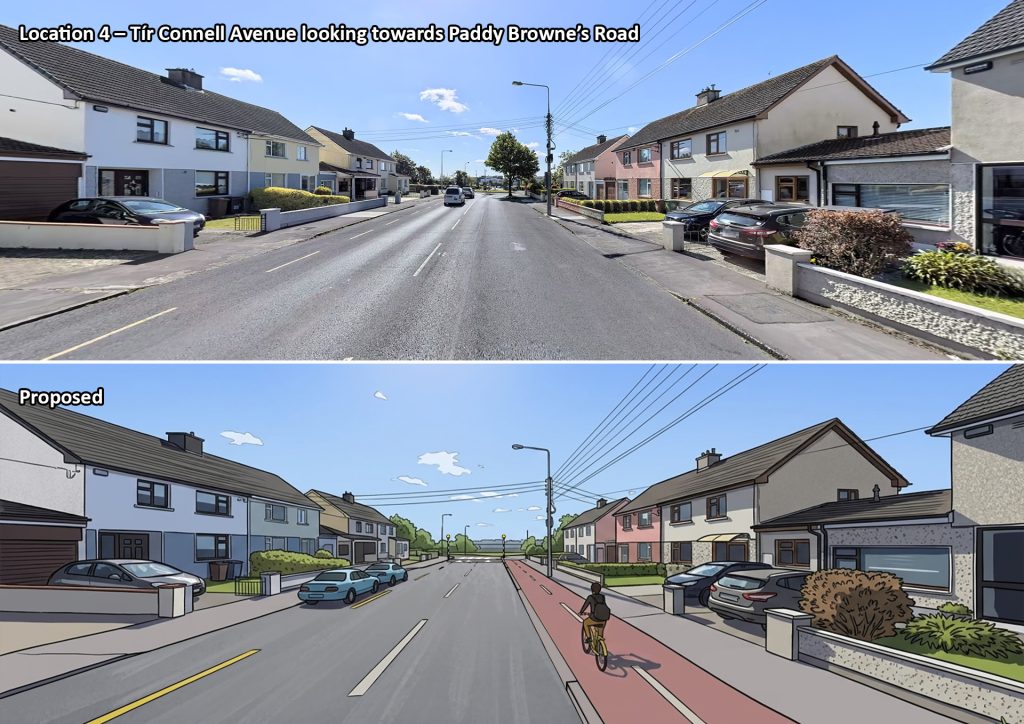
ACTIVE TRAVEL ISSUES
Active Travel schemes have become notorious in recent years, with many considering them well-intentioned disasters. Despite this, government policy has backed Active Travel as a means to improve Ireland’s public transport realm with an additional €360m announced in government funding in January.
At its core Active Travel intends to prioritise the pedestrian and vulnerable road users on our roads. In practice this means narrowing junctions, slowing traffic in places, creating cycles lanes, and redesigning some traffic management systems so pedestrians always take priority.
While almost everyone commends the idea of pedestrians and cyclists being safe and encouraged to use our roads, in practice Active Travel means slowing traffic considerably at a time when the population is increasing, and public transport is nowhere near becoming a viable option for everyday use for most people.
These projects often require major construction of old, narrow roads in residential areas, and while the public are always consulted ahead of these projects, the point has been made at multiple council meetings in Waterford that these consultations can have little material impact on the outcome. It has even been said that the plans sometime change during the construction phase meaning the projects being debated between the council, councillors and the public, may not in-fact be the exactly the same as the one that gets delivered, although any major change would have to be announced.
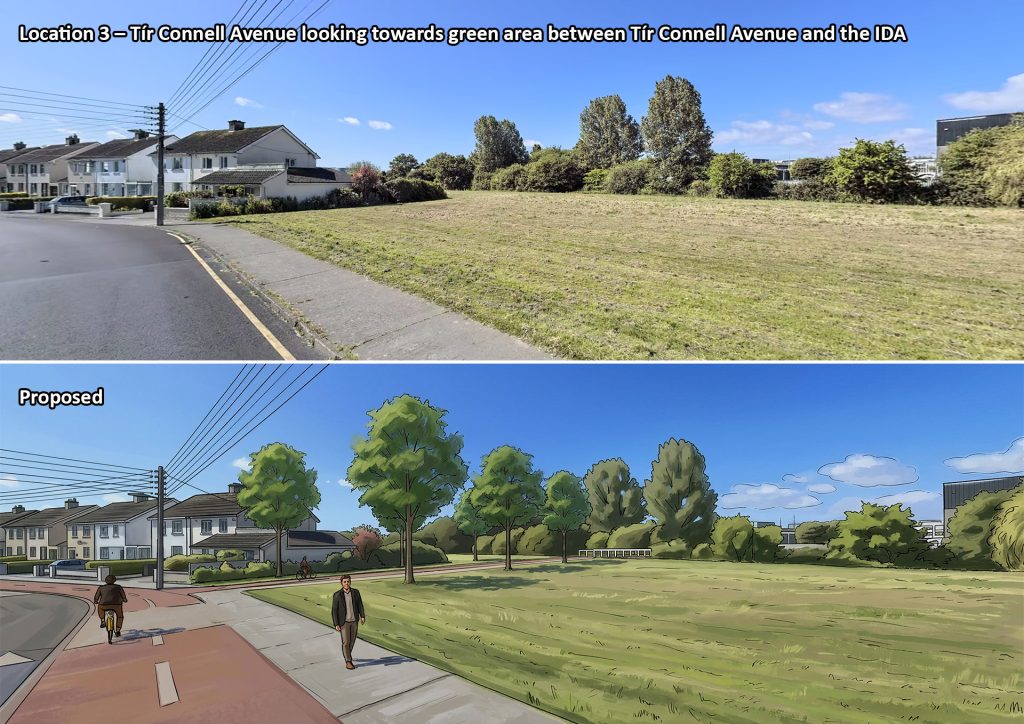
CONCERNS
The public consultation has highlighted a staunch opposition from some of the residents living in the area. One of the repeated concerns was the removal of mature trees along the route. “Removing the trees at Skibbereen and Paddy Brownes road is ridiculous,” said one submission. “These trees enhance the overall look and feel of the area. It’s just another interruption to the wildlife for more concrete.”
Although it has been said online that 51 trees will be removed, this number is not confirmed by the official documentation, which states, “While no dedicated tree survey was undertaken as part of the Lismore Park, Lisduggan, Larchville Accessible Neighbourhood Project, the locations of existing trees within the Study Area were recorded as part of the project’s topographical survey.
“The proposed scheme will necessitate the removal of a number of existing trees to facilitate the delivery of active travel infrastructure and associated public realm improvements.
“However, the scheme also includes a comprehensive tree planting strategy, with replacement planting exceeding the number of trees removed.
“As such, the proposed development will result in a net gain in tree numbers and will enhance the overall green infrastructure and streetscape character within the neighbourhood of Lismore Park, Lisduggan, and Larchville Lismore.”
Essentially, an unconfirmed number of mature trees will be removed, but more trees will be planted overall than there was to begin with.
Other objections come from residents who will lose the ability to park outside their homes and fear the use of e-scooters on a double cycle directly outside their properties.
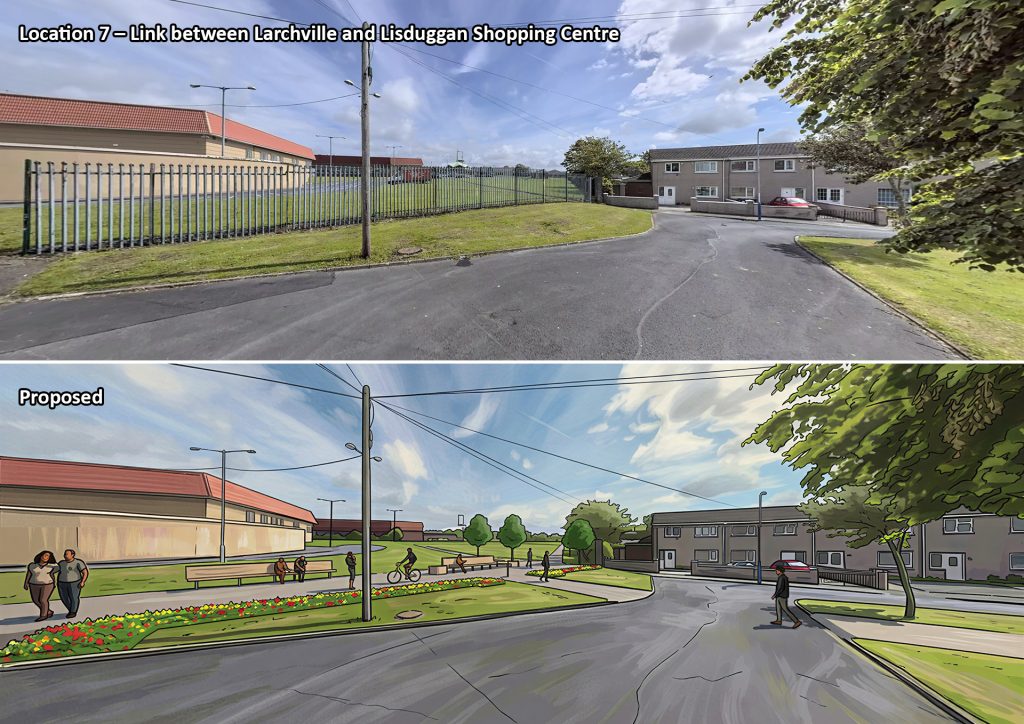
The addition of new benches close to houses has also stoked fears about a return of anti-social behaviour, which is said to have improved considerably in recent years.
The new walking routes being opened up in existing estates are also generating concern as residents fear it will decrease the safety of the homes by providing easier access and means of exit. One resident has a child with additional needs who is a flight risk and fears that their cul-de-sac will now be connected to a busy road, they see no benefit to the locals from the development.
ADVOCATES
Of the 17 submissions made so far to the scheme it seems that only two could be understood to be positive. This not unusual as people are far more likely to officially submit their opposition than publicly declare their support, even though they may welcome the scheme privately.
Proponents of the scheme do highlight the new direct connection between the Lisduggan Shopping Centre area and the back of the main SETU campus, as a way to benefit business and bring the college into the community.
As the official documents explain, the delivery of the scheme will result in:
- A transformation of the Lismore Park, Lisduggan and Larchville areas of Waterford City into a highly accessible neighbourhood where daily needs can be met within a short walk or cycle;
- Improved permeability for pedestrian and cyclists within the Study Area;
- Provision of high-quality and safe pedestrian walkways and cycleways;
- Improved accessibility to public transport via walking and cycling;
- Provision of high-quality pedestrian and cycle linkages to cater for shorter trips through the neighbourhood and through surrounding residential areas, which can be used to access education (primary, secondary and third level), retail, employment, healthcare, public transport, and community facilities;
- Reduced reliance on car trips within this neighbourhood, especially for short-to-medium trips, by providing sustainable alternatives.
The public consultation for the Accessible Neighbourhood Project is still open and can be found on consult.waterfordcouncil.ie.
Following the consultation phase, it is understood that revised plans will be explained at a public meeting on 3 September, next.
Funded by the Local Democracy Reporting Scheme
