
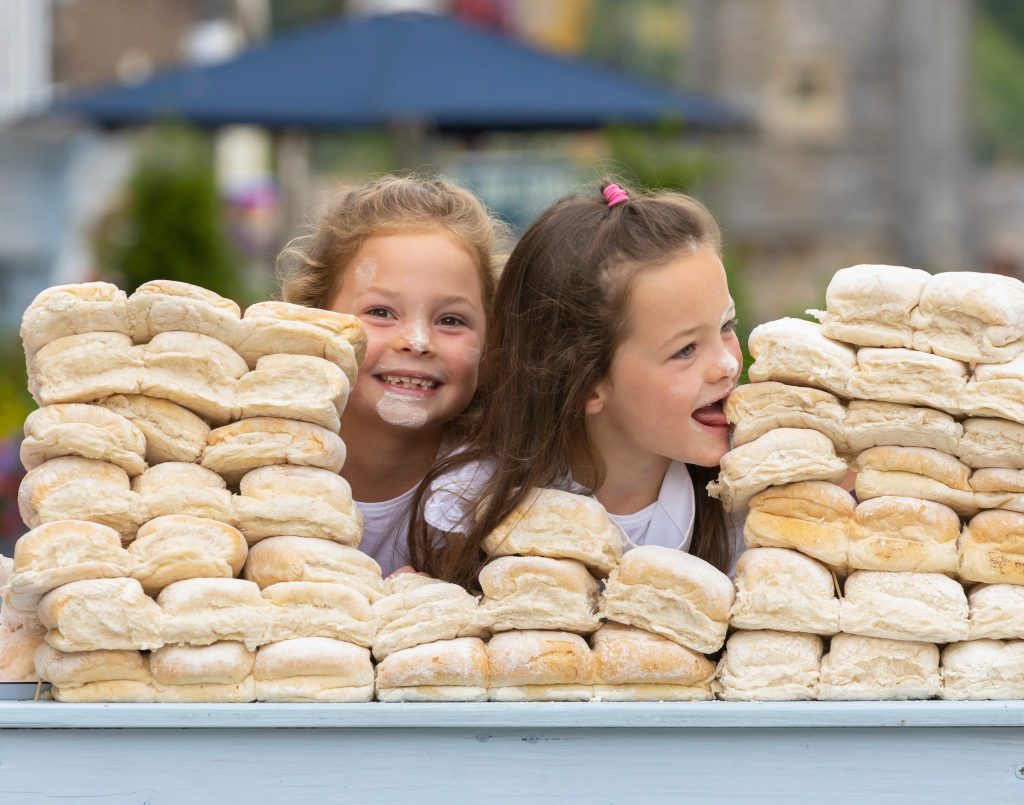
‘Blaa’ added to Oxford English Dictionary
The iconic Waterford Blaa was officially added to the Oxford English Dictionary (OED) last week, marking a significant milestone in its history.
But, the first, earliest known use of the noun ‘blaa’ was in the 1960s when it appeared in an advertisement in The Munster Express: ‘Early Morning Blaas, Bread, Morning Goods and Confectionery now available from 8 a.m. daily’. The Munster Express, 8 July, 1960.
The OED definition lists it as: “A soft white bread roll dusted with flour, particularly associated with Waterford, Ireland”.
Made from flour, salt, yeast and water, the blaa was introduced to Waterford by the French Huguenots in the 17th century, and has a unique floury white top to protect it during baking.
It was in 2013 when the humble blaa was awarded Protected Geographic Indication (PGI) status by the European Commission – which means that only blaas made by specialist bakers in Waterford City and County can legally be called blaas.
The OED said the exact history of the blaa is difficult to trace, but possible origins of the word blaa could be the French words ‘blanc’ meaning white and ‘blé’ meaning wheat, but neither of these suggestions can be substantiated; while a borrowing from the Irish word bleathach meaning oatmeal cake has also been suggested, but poses various difficulties.
Blaas are made fresh daily in Waterford by Walsh’s Bakehouse, who make the traditional Blaa – with techniques passed down through generations at this family-run bakery; Hickey’s Bakery has made the authentic taste of hand-crafted Blaas in Waterford since 1958 and in West Waterford Barron’s Bakery & Coffee House, Cappoquin, are baking Blaas in Scotch Brick ovens since 1887.
THE MUNSTER EXPRESS CONTRIBUTES TO THE ENGLISH LANGUAGE
Chris Mulhall, a lecturer in languages at the Department of Arts and Linguistics at SETU spoke to Damien Tiernan on Déise Today, WLR FM, last Friday morning about the word ‘blaa’ being entered into the OED and how the first use of the word was recorded in The Munster Express in 1960.
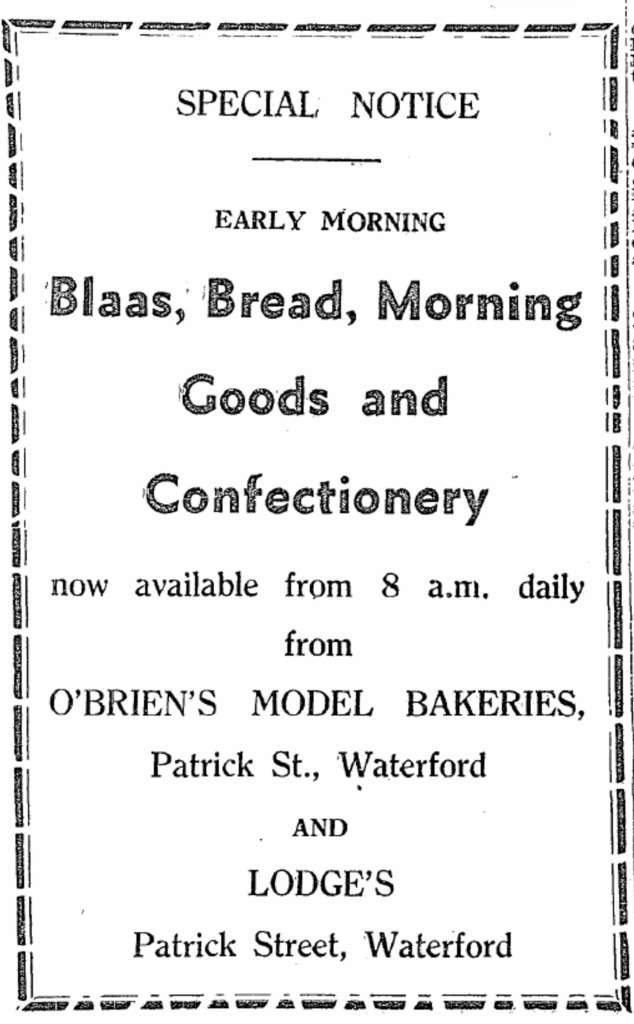
The advertisement which appeared in The Munster Express on 8th July 1960.
Mr. Mulhall mentioned the importance of digitising the written press, which enables researchers to discover such important information.
“The Munster Express has helped contribute to the origins and use of this word, which is so significant culturally and it’s contributing to the English language,” Mr. Mulhall told Déise Today. “It’s remarkable, there are six or eight entries in the OED that have been sourced directly from The Munster Express, which is brilliant, amazing.”
Mr. Tiernan added: “Well done to everybody in The Munster Express”.
OTHER HIBERNO-ENGLISH WORDS ADDED
Blaa was one of eight Hiberno-English words to be added to the Oxford English Dictionary last week. The others includes ‘spice bag’, ‘ludraman’, ‘class’, ‘morto’, ‘mineral’, ‘debs’ and to ‘act the maggot’.
BLAA ROADTRIP
Meanwhile, Chairperson of ‘Visit Waterford’ Clare Barrett said: “We love to celebrate our 1,111 years of history and heritage here in Waterford, including our unique and distinctive gastronomic heritage, so we are delighted to share the details of the ‘Ultimate Blaa Roadtrip’ and we know that participants will not only get to indulge in the unique flavours of the Blaa but also gain insights into its historical significance and the artistry involved in its creation if they ask any proud local during their visit”.
Follow the Ultimate Blaa Roadtrip itinerary to discover the best places in Waterford to experience the Blaa in all its delicious forms at https://visitwaterford.com/a-taste-of-waterford-the-ultimate-blaa-roll-trail/ or VisitWaterford.com
Chris Mulhall from SETU discussing recent additions to the Oxford English Dictionary on WLR with Damien Tiernan
SOPHIA POWER AND PAUL MOONEY
