
The Waterford Hill Group were formed 25 years ago, bringing together farmers from wider Comeragh area, including Clonmel, Kilbrien, the Nire, Rathgormack, and Kilrossanty.
The group allows the farmers to share generations of experience, exchange knowledge and improve productivity. The group won a European award in 2023 for the Comeragh Uplands and Communities EIP Project which focussed on sustainable upland habitat, sheep production and biodiversity.
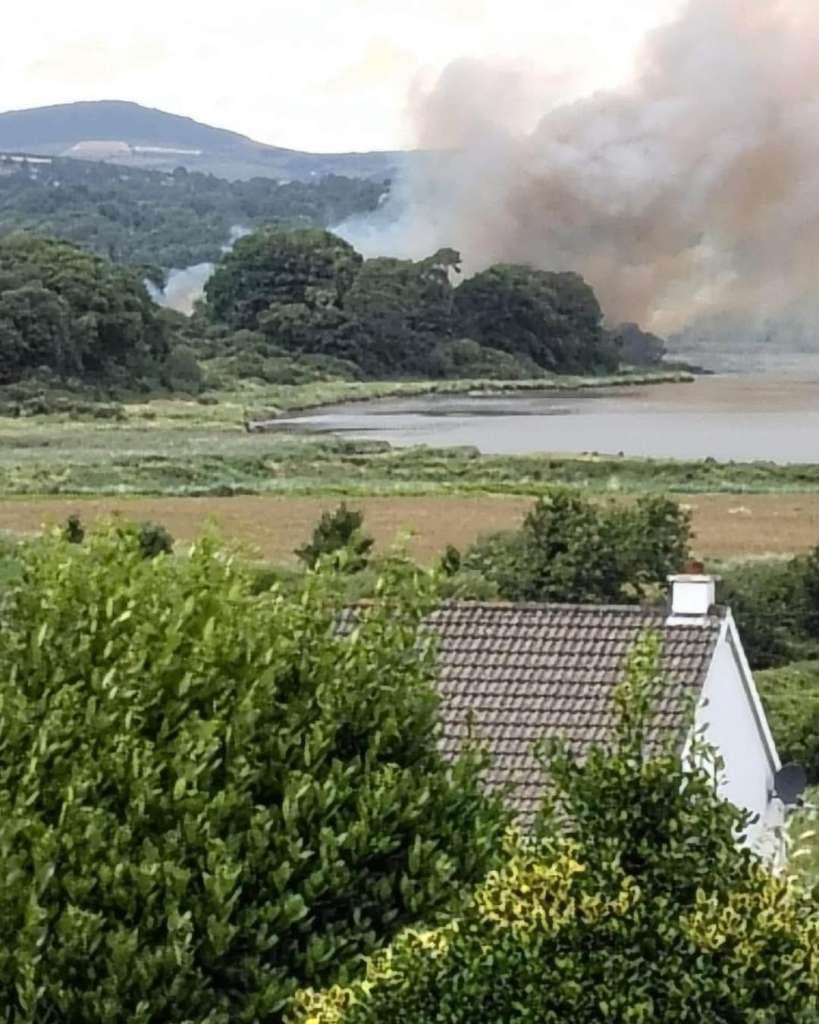
Following the wildfires this summer along the Comeraghs, and with the support of Waterford Mayor Liam Brazil, the Waterford Hill group is calling for the right to pursue controlled burning beyond the current limit of February 28.
The group argue that the current controlled burning window from September 1 to February 28, means that much of the overgrowth on the mountain is still wet and cannot be burned effectively, causing a build up of heather, gorse and bracken. They want the burning window to be extended into the drier months.
“Our mountains are part of what we are, they shape our farming communities, our heritage and our tourism but they have to be managed and maintained properly if we are to prevent catastrophic wildfires in the future,” the Hill Group said in a statement.
“Controlled burning when managed carefully by local hill farmers, fire service, NPWS and local authorities collaborating together is the best way to do this.
“As we have witnessed recently, when a heatwave or a spark hits this overgrowth, the resulting wildfires burn out of control. These fires burn intensely and are an ecological disaster, resulting in 100% destruction on wildlife and biodiversity as well as destroying peat layers and threatening nearby homes and forestry,” the statement continued.
“If farmers were allowed to carry out controlled burning on a rotating basis on different sections of the mountain each year, this fire-load would not be allowed to build up. Instead the heather and gorse would be cleared on a regular basis allowing new green shoots to emerge (including native wildflowers and grasses), which would support diverse upland birds and wildlife and provide vital grazing for hill sheep.
“It would also help to create buffers or fire belts which prevent the spread of wildfires should they occur. Controlled burns have a far less devastating effect on wildlife as they burn slower at cooler temperatures allowing larger trees and soil structure to stay intact and animals to move safely to a non-burning area.”
The group are calling for an immediate meeting between local and national stakeholders. It is understood they have contacted the Parks and Wildlife Service but are yet to receive a reply.
“Due to neglect in the past from previous governments, we now require urgent leadership on this issue. As farmers we need to sit down with all stakeholders involved – the government, both national and local, NPWS, fire service and Coillte to come up with a maintenance plan for each individual farmer. The fire-load is increasing year on year on the hills which in turn will lead to increased risk to livestock, biodiversity, property and human life.
“As farmers we are deeply concerned about a disaster waiting to happen.
“Are we going to wait for human life to be lost before we act?” the group added.
AARON KENT

Funded by the Local Democracy Reporting Scheme
