
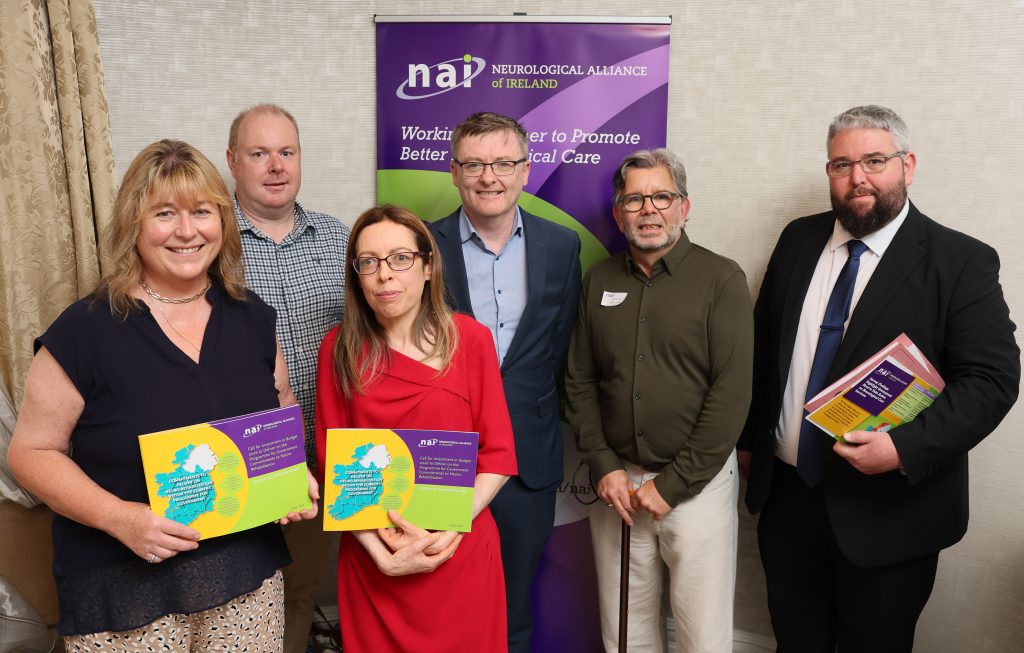
The Neurological Alliance of Ireland (NAI), the national umbrella body for over 30 neurological organisations, met with Waterford Oireachtas members at a pre-Budget event held this week, at which NAI members raised concerns about, ‘The government’s slow response on neurorehabilitation services is creating a postcode lottery and exacerbating health inequalities for those most in need.’
Representatives from Waterford including David Cullinane TD and Connor McGuinness TD, heard at the event in at Buswells Hotel, Dublin, that gaps in neurorehabilitation services mean that a quarter of those surveyed for, ‘The Right Care in the Right Place: Access to Services for People with Neurological Conditions Across Ireland,’ report have never been able to access neurorehabilitation.
They also heard that 73% of respondents in the South East had been unable to access community neurorehabilitation services in the past 12 months.
In its pre-budget submission, the NAI is calling for investment in four community neurorehabilitation teams in order to deliver on the Programme for Government commitment to complete the rollout of community neuro-rehabilitation teams across the country. The North West, South East, North Dublin and the Midlands have received no funding to date for teams promised in the 2019 National Implementation Framework for the Neuro-rehabilitation Strategy.
The Neurological Alliance is also seeking funding for the provision of 45 regional inpatient neuro-rehabilitation beds across the South West and Midlands regions to begin to deliver on the Programme for Government commitment to tackle the national shortfall of 175 beds nationwide.
Bernadette Myler Driscoll, a patient advocate from the South East and Chairperson of the Parkinson’s Association Waterford Branch highlighted the lack of funding for the community rehabilitation team in the area. Bernadette currently cares for her mother who has Lewy Body dementia and Parkinson’s Disease, and cares for her husband who was recently diagnosed with Alzheimer’s.
Bernadette organises weekly social and physical activity meetups for people with neurological conditions and their carers, set up in 2020.
“My mother started running coffee mornings, chair yoga, and meditation events 20 years ago with my support. Since she became unwell, I’ve continued them because social connection is vital. Many say the worst part of these conditions is loneliness as mobility, communication skills, and confidence decline. We rely on fundraising and volunteers with lived experience to keep these events running.
“With an ageing population and rising diagnoses, support cannot depend on volunteers alone. It must be structured, nationwide, and delivered through essential community teams.”
Magdalen Rogers, Executive Director of the NAI, welcomed the recommitment to deliver on promised neurorehabilitation services in the Programme for Government published this year, however she says that the longer the government falls short on its responsibility to patients, the greater the inequalities experiences across the country.
Ms Rogers said: “The importance of community neurorehabilitation teams cannot be understated. The specialist service and care they deliver within the community for people with a wide range of neurological conditions is proven to reduce hospital stays by an average of three days per patient. These teams also play a critical role in avoiding further admissions to hospitals and long-term care.
“The NAI pre budget submission is seeking funding for 20 neurorehabilitation beds for HSE South West region in the upcoming Budget to tackle the shortage of 32 neurorehabilitation beds in the region.
“A community neurorehabilitation team for the South East was promised in 2019. NAI is seeking funding in the upcoming Budget to deliver on this commitment. The NAI survey showed that 73% of respondents in the South East had been unable to access community neurorehabilitation services in the past 12 months.
“In 2019, the government committed to funding nine community rehabilitation teams. To date only five of those regional teams have been delivered and there remains gaps within those services. The 2019 Framework also committed to creating 306 neurorehabilitation beds. A 2024 HSE report found there is a continued shortfall of 175 beds nationwide.
“The results of our own survey, which we’ve shared with TDs, highlights the reality of these gaps in neurorehabilitation. Behind these percentages is the reality of thousands of people throughout Ireland being denied the right to rehabilitation enshrined in the United Nations Convention on the Rights of People with Disabilities”.
The NAI represents over thirty charities advocating for the rights of over 860,000 people in Ireland living with a neurological condition.
For more information, visit www.nai.ie.
