
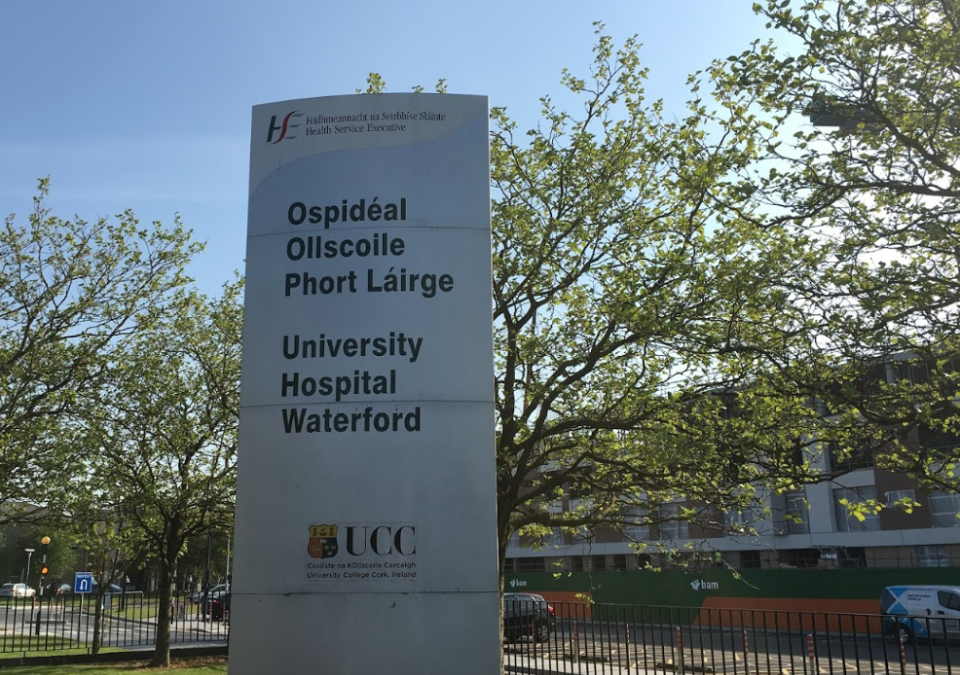
An interim arrangement has been reached for post-mortem examinations to be carried out three days a week at University Hospital Waterford (UHW), as the usual seven day a week service ceased operating on 1 January.
It was reported last October that consultant pathologists at UHW formally notified hospital management in November 2024 that they would be withdrawing from performing all coroner-directed post-mortems from January due to “unsafe workloads and chronic understaffing.”
It is understood that in December, an interim arrangement was agreed to allow for locum pathologists to come over three days a week from the UK, which will involve post-mortem examinations still being carried out on Mondays, Tuesdays and Fridays at the hospital.
Waterford County Coroner Mr John P. Goff told The Munster Express that this will still cause a “huge shortfall” in the number of post-mortem examinations that can be carried out for families in the south-east, but acknowledged that they will have to wait and see how the arrangement develops before a long-term solution is found.
This comes as Minister for Justice Jim O’Callgahan highlighted in the Dáil before Christmas that the situation concerning post-mortem examinations at UHW had reached a “critical juncture” as the deadline of 1 January approached.
Previously, almost 700 autopsies were carried out yearly in the pathology unit of UHW on behalf of the Coroner’s Service. The service covers the entire south-east, including the areas of Waterford, Wexford, Kilkenny, Tipperary, as well as Carlow. A post-mortem examination can be requested by the Coroner in any instances of sudden, accidental or tragic deaths.
It is understood that a reduction in the number of autopsies being carried out yearly could have knock-on effects for how long families may have to wait to hold a funeral service for their loved ones.
MATTER RAISED IN THE DÁIL
Tipperary TD Michael Murphy raised the issue to Minister O’Callaghan in the Dáil in December, who confirmed that a meeting had taken place in UHW involving representatives from the Department of Justice, with a view to resolving the situation by engaging with locum pathologists before January, while acknowledging that a long-term solution would still be needed.
“My Department has been engaging with locum pathologists with a view to agreeing a solution to the situation in UHW from 1 January next. This approach is an unfortunate necessity to minimise any impact on bereaved family members who are engaging with the Coroner service,” Minister O’Callaghan said. He added that “A long-term sustainable solution is, nevertheless, required whereby locum pathologists are not relied upon to provide for the autopsy service and instead this service to the community is provided from within the pathology profession in Ireland generally.”
The Minister also highlighted overall issues with understaffing within the pathology profession in Ireland. He said: “I am afraid I am also advised there are issues arising with respect to the performance of post mortems within the pathology profession generally. These include issues relating to training and recruitment, as well as competing demands on pathologists in areas of diagnostic and research work. These are concerns that I am particularly worried about. There is an overlap between my Department, which has responsibility for the Coroner Service and inquiries, and the Minister for Health, Deputy Jennifer Carroll MacNeill.”
At the time, before the agreement was reached, Deputy Murphy had sought clarity from the Minister on where examinations would be carried out, to protect families from the distress caused by delays. He said: “From 1 January post mortems will no longer be carried out at UHW, a service that carries out 700 cases every year, which are often the most tragic and traumatic of deaths. Behind every one of these cases is a family in shock waiting for answers and waiting simply to lay a loved one to rest yet…there is no clarity on who will perform these examinations, where they will take place, or how families in counties Waterford, Wexford, Kilkenny, Carlow and Tipperary will be protected from delays that could last days or weeks.”
“Families deserve certainty, they deserve compassion and a plan, and they deserve it now,” Deputy Murphy added.
Minister O’Callaghan highlighted the concern of a longer wait for funeral services by saying he would not like to see Ireland develop in the same way as other countries, where there is a “significant delay” between death and the funeral.
The Minister added that he is in the process of seeking to review the law in respect of coroners, and examining the circumstances of when a post-mortem should be ordered, adding that it is “not needed in all the situations that we have them at present, particularly for elderly people” but “that level of reform will not be in place by 1 January.”
DEPARTMENT OF JUSTICE COMMENTS
The Munster Express reached out to the Department of Justice for a comment on the matter and a representative provided this response.
“Policy and operational responsibilities for the provision of postmortem examination services to support the work of the Coroner Service is supported by several departments and agencies. The Department of Justice, Home Affairs and Migration is responsible for the legislation underpinning the work of coroners, while the provision of the postmortem examination service is largely provided through the health service and its personnel. It is important to clarify that pathologists, other than forensic pathologists in the Office of the State Pathologist, are not contracted to either the Department, or to coroners.”
The representative added that Minister O’Callaghan has been engaging with the Minister for Health to “address the challenges” of securing the provision of the post-mortem examination service.
“The Minister is aware that securing the provision of the postmortem examination service for the coronial death investigation function is challenging and has been engaging with the Minister for Health to address the reasons behind these challenges. There are issues arising with respect to the conduct of port-mortem examinations within the pathology profession generally, including relating to training and recruitment, as well as competing demands on pathologists in areas of diagnostic and research work. The Minister acknowledges those concerns,” the spokesperson told The Munster Express.
The statement from the Department of Justice also mentioned that the interim arrangement is an “unfortunate necessity” to minister the impact of delays on bereaved families who are engaging with the Coroner Service. “This approach is an unfortunate necessity to minimise any impact on bereaved family members who are engaging with the Coroner Service. However, a long-term sustainable solution is nevertheless required, whereby locum pathologists are not relied upon to provide the autopsy service, and instead this important service to the community is provided from within the pathology profession in Ireland generally,” the spokesperson concluded.
Robyn Power
