
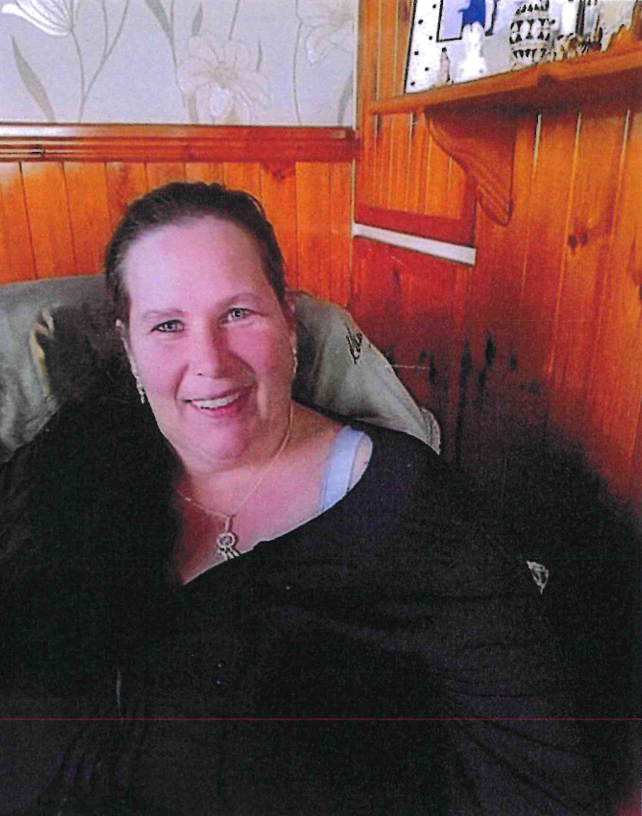
The family of New Ross woman Esther ‘Essie’ Flynn, who passed away from a brain hemorrhage at University Hospital Waterford (UHW) over four years ago, are calling for a “formal public apology” from the Minister for Health and HSE following the inquest into her death.
Mrs. Flynn, who was aged 54, died at UHW on 26 May 2022, while she was an inpatient at the hospital. She had been admitted a few weeks previously but was discharged and subsequently readmitted a week before her passing in May 2022.
The inquest into her death was held at Waterford Courthouse on Monday 16 November, before Coroner Joseph Kelly.
Inspector Niall Daly read out a statement on behalf of Garda Sean White, who was called to the Intensive Care Unit (ICU) at UHW following Mrs. Flynn’s passing. Insp. Daly said that Garda White was informed that the deceased had been admitted to hospital in May 2022 after presenting with symptoms including a decline in mobility, abdominal pain, and slurring of speech.
Consultant Pathologist Dr. Mutaz Mohammed Nur gave evidence of a post-mortem examination that he carried out on Mrs. Flynn.
Dr. Nur said he was informed that the deceased had developed ‘concerning’ symptoms of a blood clot in the lung (known as a pulmonary embolism) during her time as an inpatient, and was prescribed a blood-thinning anti-coagulant medication as a result.
The doctor was also informed that Mrs. Flynn had a history of hypothyroidism, epilepsy, and had experienced deep-vein thrombosis (DVT) a number of years previously.
Dr. Nur told the court that there was ‘no evidence’ Mrs. Flynn had suffered a pulmonary embolism, as no clots were found during the post-mortem examination. He stated that although there was evidence of ‘narrowing’ in her coronary artery, there was ‘no damage’ to her heart, and there was ‘congestion’ in her lungs.
It was also heard that the post-mortem examination on Mrs. Flynn found ‘enlarged’ lymph nodes on her neck and groin, indicating signs of lymphoma.
Dr. Nur said that the deceased’s brain was examined by neuropathologist Dr. Michael Jansen at Cork University Hospital (CUH), who found that she had a ‘large’ amount of bleeding on her brain.
Overall, Dr. Nur noted Mrs. Flynn’s cause of death was an intracerebral hemorrage, as a result of complications from anti-coagulant medication. He stated that no toxicology report was conducted on the deceased, as there was a ‘clear’ cause of death.
The court heard evidence next from Infectious Diseases and General Medicine Consultant Dr. O’Riordan, who treated Mrs. Flynn during her time in hospital.
Dr. O’Riordan said she oversaw the deceased’s discharge from her first hospital stay on 16 May 2022, and was on leave for a period of time when Mrs. Flynn presented to UHW again a few days later, but subsequently returned, and oversaw her care.
Dr. O’Riordan gave evidence of tests that were carried out on Mrs. Flynn during her first inpatient stay, including a CT scan, lymph node biopsy, and MRI on her brain. The doctor stated that at this point, a differential diagnosis of lymphoma was made, and the deceased was “anxious to return home” before she was subsequently discharged on 16 May 2022, with outpatient follow up appointments scheduled.
It was heard that the deceased presented to the UHW Emergency Department a few days later, with symptoms including generalised weakness, nausea, and an elevated heart rate. Dr. O’Riordan told the court that Mrs. Flynn was given antibiotic treatment and had a lumbar puncture and chest x-ray completed, which both returned normal results.
The doctor added that on 22 May 2022, Mrs. Flynn was noted to have had ‘worsening’ arm weakness, and was deemed ‘high-risk’ of DVT or PE, due to her history and the fact she had been immobile for a period of time.
Dr. O’Riordan said it was ‘not possible’ for Mrs. Flynn to be weighed while she was an inpatient, as she was ‘very unwell’ and ‘unstable’. As a result, it was heard that the deceased was prescribed anti-coagulant medication based on an estimate of her weight by doctors.
The court was told that Mrs. Flynn had an ‘elevated’ result on a D-Dimer blood test done to detect clots, but a CT angiogram that was performed was negative for any clots. Dr. O’Riordan said that changes on the CT scan ‘suggested’ the deceased could have been suffering from a ‘cardiac event’.
Dr. O’Riordan said Mrs. Flynn ‘deteriorated rapidly’, with another CT scan showing a ‘large’ hemorrhage on her brain. It was heard she was subsequently transferred to the ICU, and that her weight was recorded as different to what it had been estimated as. This was before she passed away on 26 May 2022.
Acting on behalf of Mrs. Flynn’s family, barrister John Gordon SC confirmed with Dr. O’Riordan that the deceased had been prescribed prophylactic clexane, an anti-coagulant, during her first hospital admission, and asked why no assessment on her suitability for this treatment was made on her readmission to hospital.
Dr. O’Riordan said that there was a ‘reason’ for this, as Mrs. Flynn had been noted to have an elevated INR level, the platelets in her blood were ‘reduced’, and she was awaiting a lumbar puncture procedure.
Mr. Gordon noted that another doctor who oversaw Mrs. Flynn’s treatment seemed to regard her not being put on anti-coagulant treatment as a ‘mistake’. This doctor was not present in court, but Dr. O’Riordan stated from the notes, that this doctor “could not find a reason why” Mrs. Flynn was not on the treatment, as she had a ‘high risk’ of DVT and PE.
Dr. Michael Saab, Consultant in Emergency Medicine, also gave evidence of an independent report that he conducted on the dose of anti-coagulant medication that Mrs. Flynn received before her death.
Dr. Saab said he concluded that the dose of medication prescribed to the deceased was ‘wrong’. The doctor stated that the deceased should have been prescribed prophylactic clexane during her second hospital admission, which is a lower preventative dose of the anti-coagulant, but was instead prescribed a therapeutic dose of clexane, which is a higher amount used to treat an active blood clot.
Dr. Saab noted that ‘no risk assessment’ was carried out for a period of four days following Mrs. Flynn’s second hospital admission, which he understood to be a “deviation from [hospital] protocol,” which states that an assessment should be carried out within 14 hours of a decision to admit a patient.
Consultant Haematologist Dr. Will Thomas testified at the inquest via video link. Dr. Thomas told the court that he concluded that the therapeutic clexane dose that Mrs. Flynn received ‘substantially’ increased her risk of bleeding, compared to an alternate scenario if she had been given a lower prophylactic dose of clexane.
Counsel for the HSE noted that Dr. Thomas had stated there was a risk of between 0.1 – 0.7% of patients who were annually prescribed a therapeutic dose of clexane experiencing a hemorrage. The doctor stated that the bleeding risk from the medication is “higher when [its] first administered.”
Mr. Gordon said that it was ‘very disappointing’ that there was no apology forthcoming from the HSE.
The barrister told the court that for Mrs. Flynn’s family, the last four and a half years have been a ‘battle’.
“They remain extremely distressed and angry at the rather callous way the HSE have treated them, not giving the courtesy of an apology,” Mr. Gordon said.
Mr. Gordon said he was seeking for the Coroner to address the hospital failure in not triggering the protocol for four days following Mrs. Flynn’s admission as a recommendation for future protocol.
However, counsel for the HSE stated he had been instructed for an appropriate recommendation to be around “further education for hospital staff regarding adherence to protocol regarding VTE” which includes the conditions of DVT and PE.
Counsel for the HSE stated he was seeking a ‘narrative’ verdict, as Mrs. Flynn’s death was “not the result of a medication error”.
The barrister said UHW extends its “sincere condolences” to the Flynn family, but the HSE could not provide an apology as although it was a tragic outcome, the organisation was “not at fault.”
Mr. Kelly determined that Mrs. Flynn’s death was a result of ‘medical misadventure’, stating that there is “no connotation of civil liability” in the Coroner’s Court, and “nobody was being blamed.”
The Coroner made a number of recommendations, which had been submitted by Mr. Gordon. Firstly, for disclosure of ‘notifiable incidents’ under the Patient Safety Act 2003 to always be adhered to, for the protocol surrounding anti-coagulant medication to be communicated to all hospital staff in Ireland, and for ‘comprehensive contemporaneous notes’ to be kept by medical staff where possible.
Finally, for families to receive ‘timely disclosure’ in cases where their loved ones have passed away.
The Coroner acknowledged there is a ‘major issue’ with communication within the HSE, which is related to staffing levels.
Mr. Kelly expressed his ‘sincere sympathy’ to the family of Mrs. Flynn who were present at the inquest, and thanked them for attending, adding that he hoped the conclusion of the inquest can bring them ‘some closure’.
FAMILY STATEMENT
Following the verdict, a statement on behalf of the Flynn family was provided by Whelan Law.
It read: “The Flynn family welcomes the Coroner’s verdict of medical misadventure and is now calling for a formal public apology from the Minister for Health and the HSE for the failings in care, the failure to provide timely open disclosure and for the distress caused to the Flynn family over the last four and a half years.
“The Flynn family should never have had to endure such a lengthy, costly and distressing process to establish what happened to Esther and determine the circumstances surrounding her death. Again, when called upon to give an apology in the Coroner’s Court, the HSE refused to do so.”
The statement added: “While recommendations, including the need for a Risk Assessment to be carried out on Esther’s re-admission to University Hospital, Waterford, have been made following the inquest, the family remains concerned about whether these will be implemented. It is not enough to make recommendations at individual request. There must be accountability, action and meaningful change. Families deserve answers, patients deserve safe care, and lessons must be learned.
“Over the past two years alone, there have been at least 17 other cases in which bereaved families have made the same pleas: We don’t want this to happen to another family.
“On behalf of the family, we have made submissions to the Minister for Justice calling for reform of the outdated Coroners Act 1962 to bring it in line with the requirements of a modern inquest system.
“In June of last year, the Minister for Health, while publicly apologising to another patient, specifically referenced the lack of Open Disclosure in that patient’s case, and indicated that Patients need timely open disclosure and resolution to their cases rather than the added stress of the Court process. We call on the Minister to renew that commitment and to further commit to the full future implementation of the Patient Safety Act.
“We are also seeking an explanation as to why a system analysis review was not carried out in this case, calling for an inquiry with meaningful family input,” the statement from the Flynn family concluded.
Funded by the Court Reporting Scheme

Robyn Power
