
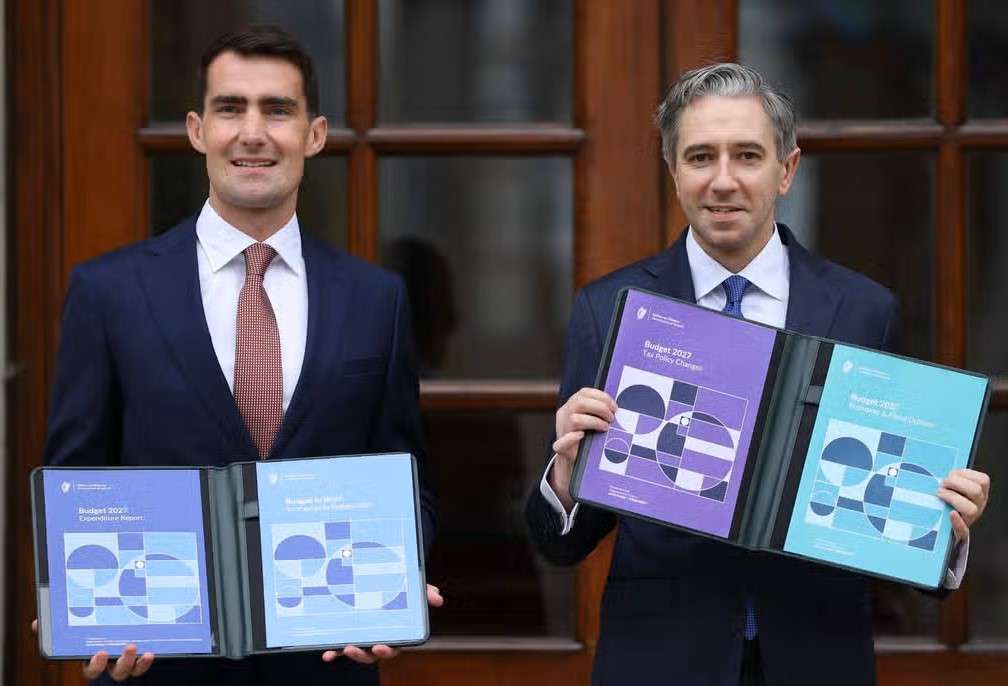
On October 6 last, Tánaiste and Minister for Finance, Simon Harris, announced the National Budget for 2027.
Although the Government is running a headline surplus of €9 billion, the soaring cost of living, increasing global uncertainty, and Ireland’s reliance of corporation tax mean the country’s financial and social situation is complex and changing.
The Munster Express spoke to Shane Connors, a Managing Partner in Waterford based accountancy firm, ConnorsMeskill, and expert corporate finance, to get his overall view on Budget 2027.
“Well firstly I would have liked to see more done for the SME sector in general,” Mr. Connors said. “The pubs did get some support, and although information is scant, support for the likes of the rural pub is a good thing.
“But for the likes of the high street retailer, there really was not a whole lot for them. So, with the minimum wage up, the PRSI going up, and auto enrolment coming in last year, the costs of the SME are definitely up. There was limited enough supports for them in this budget.”
Interestingly, Mr. Connors felt that from the point-of-view of the married couple with children, Budget 2027 would bring some relief.
“I think the likes of the middle-income, married couple with children will think they have done quite will out of this budget,” he said.
“The middle-income tax bracket has gone up. The maximum cost of childcare has come down. Of course, everyone will feel they could have got more, and inflation will eat into these figures as well.”
Mr. Connors also drew attention to the new government-backed investor account, which allows people to invest €12,000 per year and accrue value of up to €50,000 tax free, after which a flat 1% per annum will apply.
“That’s a lot better than what people would get on their funds in a normal deposit scheme, where DIRT [Deposit Interest Retention Tax] of 33% would apply to the interest.
“So that will encourage some saving, which is a good thing. Although they didn’t do much on the Capital Tax side. I know they changed the Inheritance Tax band, but that won’t make that much difference, and they could well be testing the water for future changes.
“Overall, I would like to see a lot more invested in capital projects,” he said. “Of course, all these capital projects came to a halt, and construction stopped for 7or 8 years, that’s why we are in the situation we are in now.”
Mr Connors saw this budget as being directed mainly at the squeezed middle of Irish society.
“The focus would seem to have been the middle earners, and I think the government have done what they can for those.”
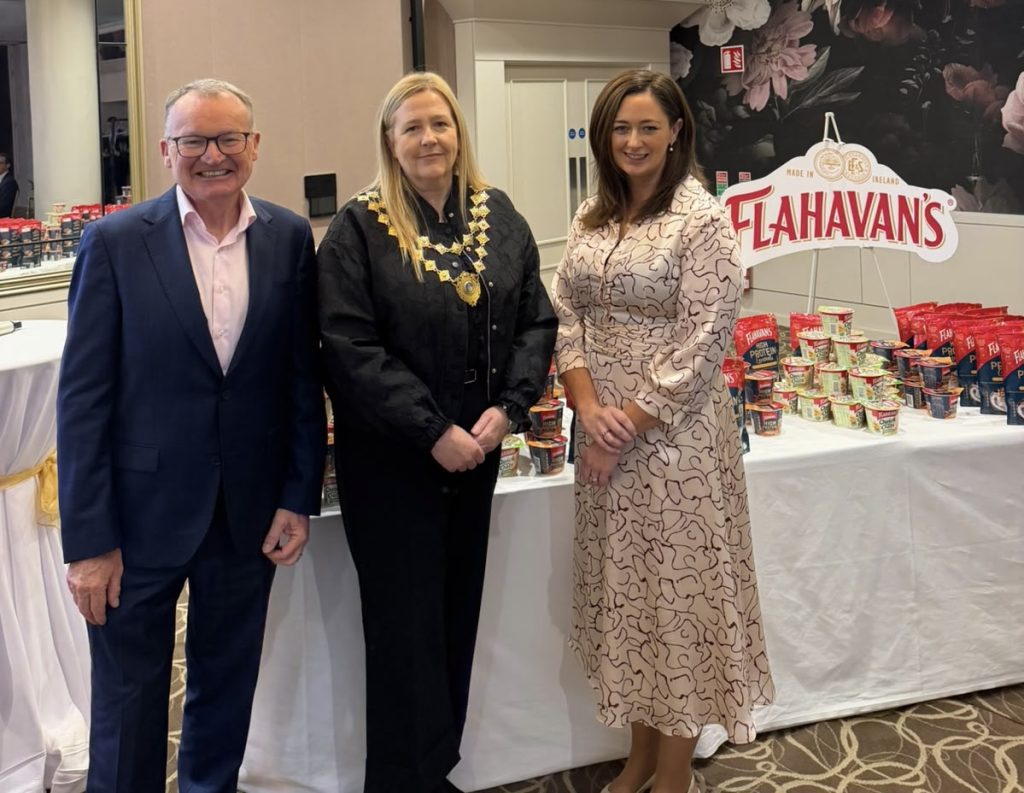
Economist Jim Power, Marian Walsh, Waterford Chamber President and Melissa Fenlon, PwC at Waterford Chamber’s Budget Breakfast.
FARMERS
The Munster Express also spoke to Chair of the Waterford IFA, Mark Connors, to gauge what Budget 2027 meant for Waterford Farmers.
“Well, we can take the positives first,” he said. “So, we have the fertiliser rebate and the fuel rebate. So that will be somewhat of a help, and will go some of the way to decreasing costs. And the fuel rebate will be granted without having to make a while new application, which is good. I believe the fertiliser rebate might be the same way too.
“But even with that said about the fertiliser we are still in a worse position than we were 12 months ago due to the Iran War and the CBAM [Carbon Border Adjustment Mechanism] tax.”
Mr. Connors then went to outline the removal of VAT on some vaccines as a ‘half positive’ for farmers—a move that was welcomed but did not deliver the benefits it could have.
“As time goes by, we as farmers want to move away from the use of antibiotics,” Mr. Connors explained. “To prevent the development of antibiotic resistance. And a proven method to do that is with vaccines. So, we have been trying to promote the use of vaccines, we asked for no VAT on the vaccines to help it along.
“What we got was a reduction from 23% to 9% on respiratory vaccines, so that doesn’t cover other viruses like Blue Tongue, or Rotavirus, so really they didn’t give a full concession at all, and even that they only applied it to a small cohort of the available vaccines.”
Mark also pointed out that the livestock schemes which he described as ‘quite successful’ including the Sheep Welfare Scheme, the Beef Welfare Scheme and the Dairy Beef Welfare Scheme received no additional funding at all, despite the inflation and other costs continuing to rise.
“Even the solar scheme is as good as closed,” he said. “Farmers embraced the idea of adding solar panels and becoming more self-sufficient, but the grant was oversubscribed from the beginning and now it is as good as ended.
“You have the Areas of Natural Constraint scheme as well, which did not get any rise. The money paid out for that in 2026 is lower than what was paid in 2007.”
Mark made the point that the increase in the minimum wage will also hit farmers. He said those who received the increase badly need it due to inflation, but wage increases are yet another cost that farmers must contend with.
“It has become a very expensive time to do business. We as farmers have to compete with prices on the world market, if we become anti-competitive then we go broke.”
FISHERMEN
The Munster Express also spoke to a fisherman and boat owner from the Waterford Estuary. Although a €20 million investment in the sea food industry has grabbed headlines, the specifics of where that money will go are not yet known.
“I would say the main feeling about the budget is scepticism,” the fisherman explained. “It’s all been pushed back to the Berkery report, but I don’t think the recommendations of that report have been made public.”
The Berkery Report was commissioned to address the major quota cuts in 2026, which are an existential threat to the Irish fishing industry. It has been reported that The Seafood Ireland Alliance requested double the €20 million that was eventually ringfenced to support Irish fishing.
“That could mean anything,” said the Waterford Estuary fisherman. “There is a lot of wiggle room in the commitment to give funding to the seafood industry,” he said.
“Truth be told it could even go to the millionaire boats up in Killybegs who lost about 50% of their quota because of Brexit.
“Really, I don’t think it will affect us fishermen down here. So yeah, scepticism is the feeling I would say,” he added.
BUSINESS
From the perspective of businesses, a persistent critique of Budget 2027, as echoed by Shane Connors of ConnorsMeskill, is that the SME sector will not really benefit, while the rising of costs of PRSI and the minimum wage will increase pressure on businesses that are already struggling to survive.
Waterford’s Chamber of Commerce suggested that Budget 2027 lacked ambition for Waterford and the South East.
A spokesperson for Waterford Chamber said: “Waterford Chamber welcomes the positive measures in Budget 2027 to support workers, families, regional investment and national infrastructure. However, the Budget falls short of the level of ambition we sought for Waterford and the South East”.
“Our Pre-Budget Submission called for decisive commitments on additional bed capacity at University Hospital Waterford, investment in SETU including the development of a medical school, accelerated delivery of the N24 and N25, improved rail connectivity and strategic investment in the Port of Waterford. While we welcome measures that support regional development and increased investment in infrastructure, much greater clarity is now needed on how these national commitments will translate into projects and delivery for Waterford and the South East.
“We also share Chambers Ireland’s concern that significant cost pressures remain for businesses. Ultimately, Budget 2027 must be judged not simply on the funding announced, but on how quickly investment is converted into infrastructure, capacity and competitiveness on the ground,” the Chamber spokesperson added.
OLDER PEOPLE
While Waterford’s older community is bound to welcome increases like the extra €5 allocated for Fuel Allowance, many were quick to question if this modest increase will even be an increase in real terms, as inflation continues to raise prices and erode the actual value of every euro spent.
The Munster Express approached Waterford’s Older People Council for their perspective on Budget 2027.
Jim Farnan, Chairperson of the Older People Council, responded: “The Waterford Older People’s Council Executive acknowledges the increases in the State Pension and other payments announced in Budget 2027, which will provide some welcome support for older people”.
“However, we remain concerned about the continuing high cost of essential goods, particularly food and home heating fuel,” Mr. Farnan said.
“For many older people living on fixed incomes, these rising costs continue to place significant pressure on household budgets and make it increasingly difficult to manage day-to-day expenses.”
MEDIA
Immediately following the Budget, the Director General of state broadcaster RTÉ, Kevin Bakhurst, came out against Minister for Media, Patrick O’Donovan, claiming that RTÉ had been left with €20 million less than agreed as part of their multi-annual funding agreement.
Mr. Bakhurst claimed RTÉ had made major decisions around investment and the commissioning of programmes based upon the level of funding that had been expected.
Minster Patrick O’Donovan referenced budgetary constraints when explaining the drop in funding, with the state broadcaster also reporting that he was unhappy with the pace of reform in the organisation.
Speaking on Friday, 9 October, Taoiseach Micheál Martin, said the Government wants to honour that original funding arrangement that predates the budget.
Anther media staple in Ireland which did not fare well in Budget 2027 was TG4. In a statement following the announcement, the Irish language channel said it was deeply disappointed with the level of funding, which fell far below what was expected.
Deirdre Ní Choistín, TG4 Director General, said: “At a time when interest in the Irish language is at a record high and demand for Irish-language content is stronger than ever, the decision not to increase TG4’s funding for 2027 is deeply disappointing”.
“TG4 is delivering growing audiences, significant public service value and economic, regional and Gaeltacht impact, while supporting the independent production sector across the country. Our funding should reflect the scale and ambition of that remit.
“This decision will inevitably have consequences for what TG4 can deliver in 2027. We will now assess the impact on our plans and strategic priorities for the year ahead.”
The channel also highlighted that they have to operate year-to-year, and do not have a multi-year funding arrangement, as is the norm for state–broadcasters across Europe.
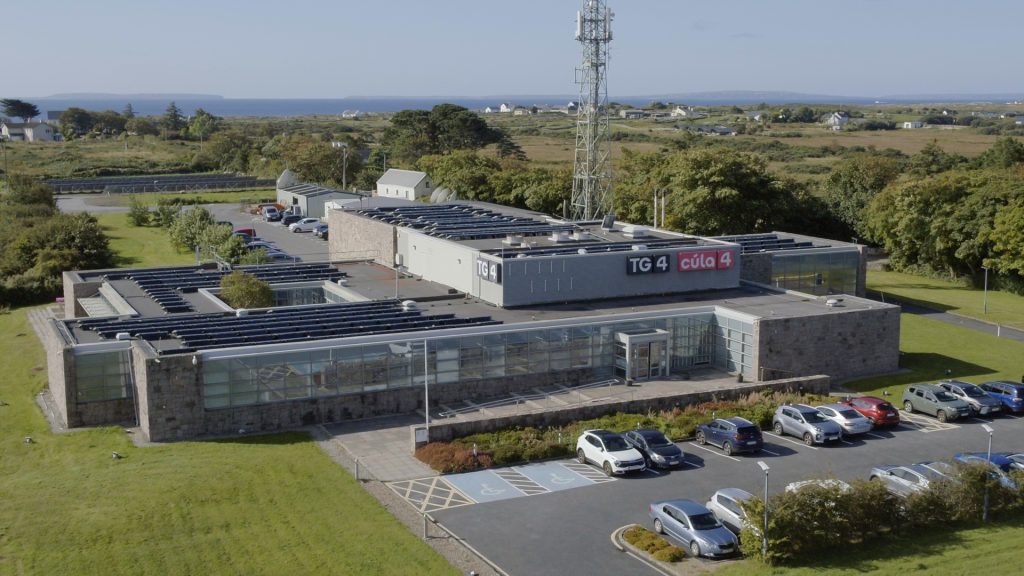
TG4 headquarters
N25
The N25 has been called one of the most dangerous roads in the country, and is often highlighted as being in need of significant investment.
Speaking at the October meeting for the Plenary Council, Cllr. Kate O’Mahoney, asked that that council contact the Minister of Transport and express ‘serious concern’ that the budget made no mention of the N25.
“Despite the an allocation from the Department of Transport of over €5.5 billion next year, and the strategic importance of the N25 to Waterford and the wider South East, it’s role in supporting local businesses, tourism and commuters, I think it is unacceptable that there was no specific commitment to ringfenced funding could be identified for this critical route,” she said.
“The N25 in Waterford has been neglected for far too long,” Cllr. O’Mahoney continued. “Despite repeated warnings and ongoing calls for action, and a long history of collisions, there has been a lack of meaningful investment to address safety concerns and protect road users. In failing to prioritise the N25 it raises serious concerns about regional development, road safety and continued connectivity across the South East.
“This council should call on the Minister to clarify why the N25 has been overlooked in budget 2027 and to commit the necessary funding and provide a clear timeline for progression and delivery of essential upgrades.”
In reply Director of Services, Gabriel Hynes agreed with Cllr. O’Mahoney to an extent, but wanted to highlight the extensive work the council had undertaken on the N25 in the past year.
“I 100% agree with you,” Mr. Hynes said. “With one small exception—we have been investing in the N25 from a safety point of view over the last number of years, we have done work at junctions, as well as driving conditions.
“Having said all that, we are all in agreement the N25 is key to connectivity all the way from the Cork direction to Waterford. It is going to be very important for us economically, from a road safety point of view, and from a capacity point of view.
“In relation to engagement with the Minister, we haven’t as an executive engaged with the Minister in relation to it,” Mr Hynes acknowledged.
“We are in discussions with TII and we are trying to find a way forward so that the N25 will get the prioritisation it deserves.
“It is certainly one of our priorities, and it should be your priorities as we as elected members,” Mr. Hynes added.
CHILDMINDERS
Despite the increase in tax relief for at home childminders, Early Childhood Ireland expressed ‘deep disappointment’ at the outcome of Budget 2027, suggesting that staff shortages issues and difficulty accessing childcare are bound to increase.
A spokesperson for Early Childhood Ireland said: “Despite waiting lists for children aged under 3 now reaching up to 980 in Waterford, and 46,000 nationwide (a 16% year-on-year increase), the membership and advocacy organisation has said that Budget 2027 has failed to put in place any real measures that will address this”.
Frances Byrne, Director of Policy at Early Childhood Ireland, added: “While we understand that the government has made a commitment to parents to reduce fees, this will not expand places or improve wages for this essential workforce”.
“Instead, we expect to see significant, increased demand for Early Years services and settings simply won’t be able to meet it. Up to 980 children under three years of age in Waterford remain on waiting lists for a place due to ongoing staffing challenges,” Ms. Byrne said.
“We know that national staff turnover now stands at 24.5%, rising to 37% in some areas and that degree-qualified staff are earning as little as €15 per hour. This is a professional workforce under severe strain and this Budget does little to relieve it,” Ms. Byrne added.
KEY CHANGES IN BUDGET
The Irish Fiscal Advisory Council calculates the total Budget 2027 spend to be around €7.4 billion.
Within this, here are some key changes that could impact everyday life:
- The national minimum wage will increase by 79 cents to €14.94 per hour
- Most weekly social welfare payments go up by €10
- Higher tax band increased to €46,500 for a single person
- Scheduled carbon tax increase for households replaced by rate reduction for lifetime of this government
- Carbon tax on fuel will not rise until May 1, 2027
- Carbon tax on home heating oil and gas is being reduced and will not increase again in the lifetime of this Government. Kerosene and natural gas will both be reduced to €48.50 per tonne.
- A €500 cost of disability payment for those getting long-term disability
- Maximum rate of Help to Buy relief up €5,000
- 20 cigarettes up €1, brining cost of most brands over €20 per pack, while alcohol has remained untouched.
- Childminders at home get €20,000 tax relief
- Fuel Allowance up €5 per week
- €550 per month max childcare fee up to senior infants
- Men, young people and LGBTQ+ get 33,000 hours of additional counselling
- 2,339 more Special Needs Assistants and 1,353 more teachers for children with special needs
- Third level student contribution fee cut by €150
- 850 more permanent defence force members
- €34.4 million to give artists full year income support
- Free Contraception Scheme age limit raised to 37
- VRT tax relief for new EVs extended two years until 31 December, 2028.
AARON KENT
Funded by the Local Democracy Reporting Scheme
