
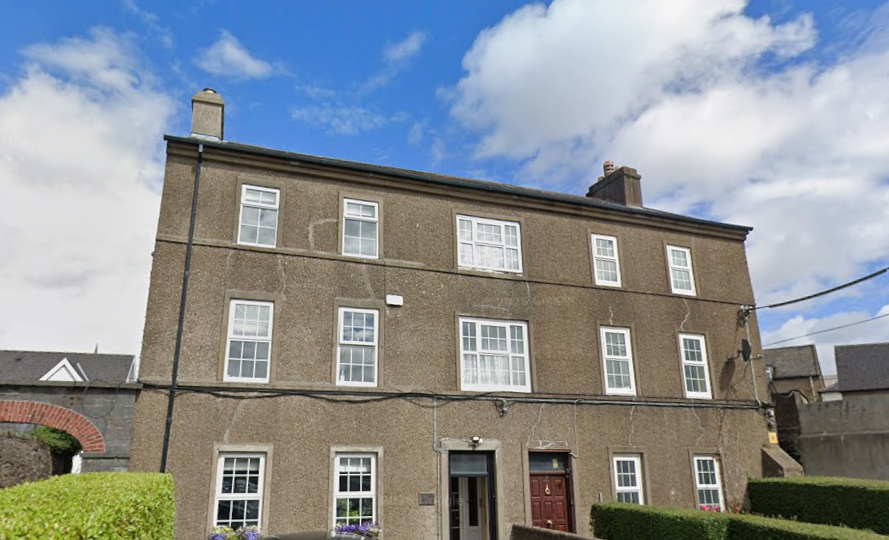
Waterford Rape and Sexual Abuse Centre (WRASAC) have launched a recruitment campaign for new volunteers to get involved with their important service.
The centre, located at 2A Waterside, Waterford city, was formerly known as Waterford Rape Crisis Centre, and its volunteers offer a 24/7 emotional and psychological support service to victims of sexual violence who have attended the Sexual Assault Treatment Unit at University Hospital Waterford (UHW).
Last week, The Munster Express met with Sexual Assault Treatment Unit (SATU) Co-Ordinator Barbara Resende to gain an insight into what is involved in the work of volunteers at the centre – with important qualities mentioned as being compassionate, a good listener, and having the desire to help and be there for someone.
Barbara also provided details during the interview of how survivors of sexual violence can get in touch with the service, and she highlighted how more education surrounding consent and differing responses to trauma are needed in our society.
VOLUNTEERS OFFER SUPPORT
“The volunteering service that we offer is a 24-hour service, seven days a week, the whole year round, bank holidays, weekends, everything, to provide emotional and psychological support to the survivors attending SATU at University Hospital Waterford,” Barbara told this newspaper.
“SATU is the Sexual Assault Treatment Unit. So whenever there is a case, any time of the day or night, we have a roster, they contact us, and they contact the person that is rostered on the day, and they go there, just for support. The goal is to have a non-medical person there, basically so you don’t have to go through the process alone, you’re there for them,” she added.
Barbara said that although the number of volunteers that are involved with the service can vary, there are currently 17 volunteers actively providing their support.
“Usually when we recruit, like we are doing a recruitment campaign now, we ask for them to commit to at least a year. We have volunteers that have been there for 20 years, but it really depends on the person. Some people only do the year and then they leave, so it’s always changing.”
Barbara added: “The volunteering is a very specific work situation, because everybody has their lives, it’s something that you do in your free time, you’re kind of donating your time to that. And like I said, people have their own lives, so sometimes something happens, like they’re going through some medical issues or they just need to take a break, so the 17 volunteers are not necessarily going to be active all at the same time, so we always like to increase that number, that way it doesn’t get heavy for anyone.”
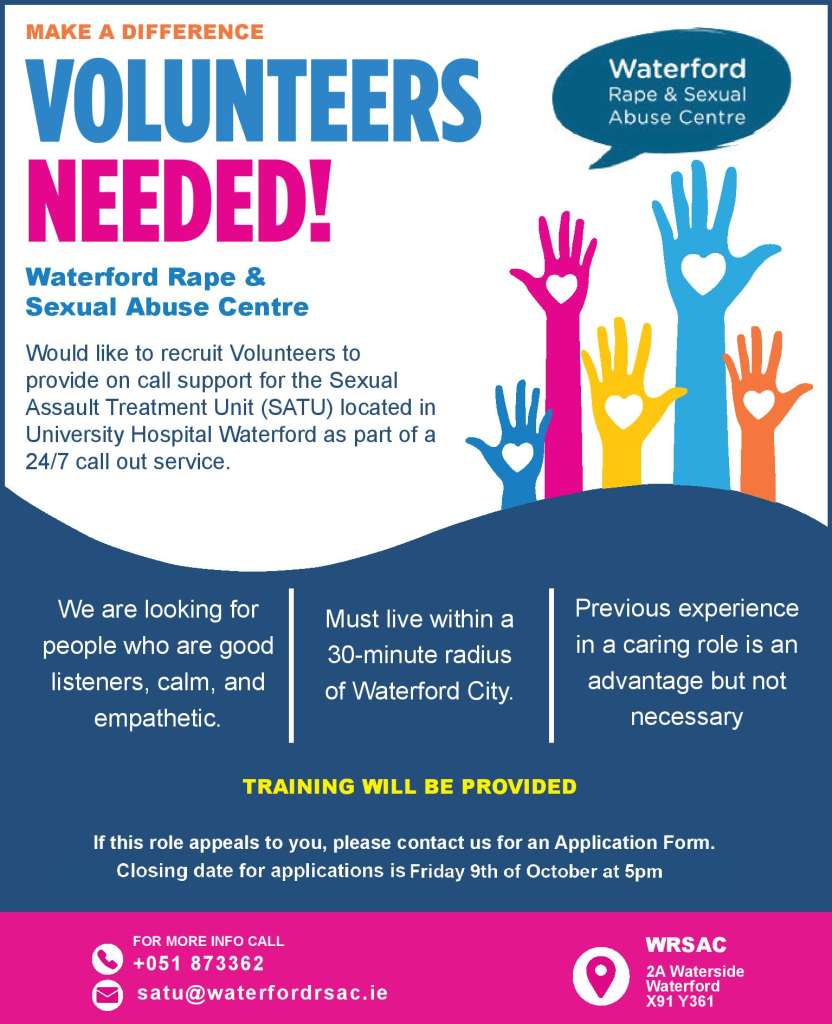
Barbara outlined that there is no specific ‘criteria’ involved with becoming a volunteer at the centre. “You really need to have the ability to listen and the desire to learn, because everything will be taught, we go through everything that can possibly happen in the midst of sexual violence. I think if you feel that you have any of those qualities, and maybe you’re wondering ‘Oh I don’t have this qualification’ or ‘I’m not suitable’, maybe you could be the perfect person. I would invite you to apply, send us an email, and we can explain a little bit about the role. We usually ask people to offer us three to four dates a month from 5.00pm to 9.00pm covering nights, and it doesn’t mean that you’re going to be called every time, but you have to be ready for it if you get the call.”
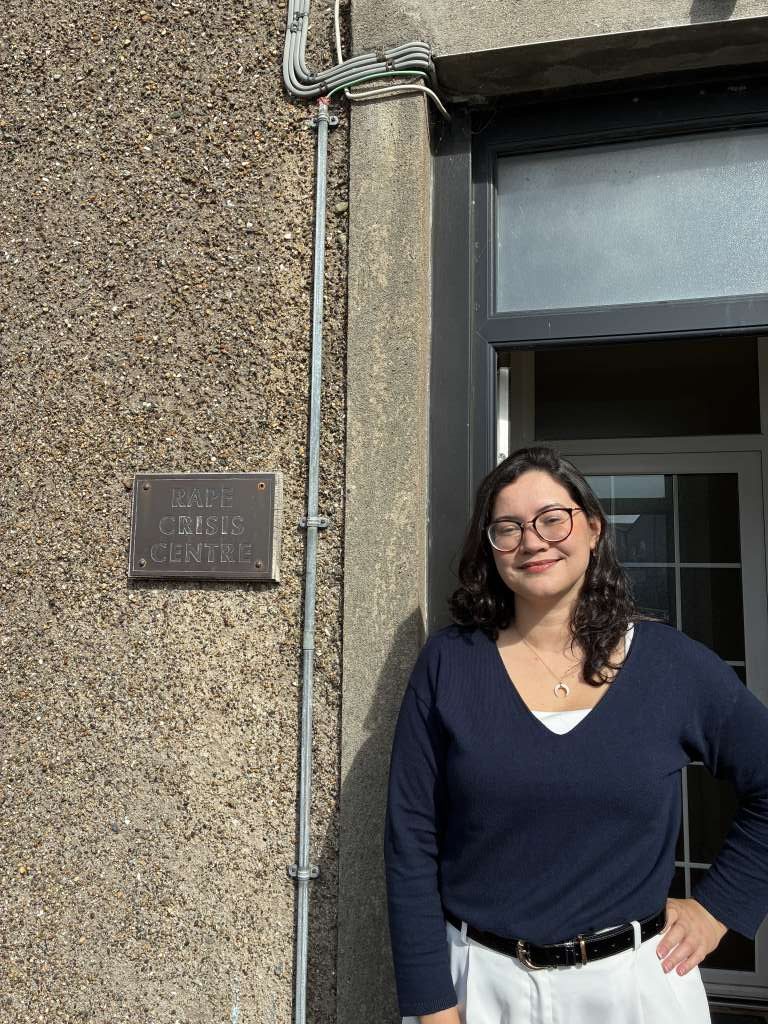
Barbara Resende of Waterford Rape and Sexual Abuse Centre pictured outside their premises at 2A Waterside, Waterford city.
“YOU HAVE TO BE OPEN TO LEARNING”
“We have people from all kinds of backgrounds, all kinds of age groups. It’s really up to the desire to learn. You have to be open to learning, because there’s a lot of myths needed to deconstruct while we do the training. And if you’re willing to help, willing to listen, want to be there for someone and make a difference in the moment that they are vulnerable, you might be the person for this position,” she added.
Barbara described how both she and a lot of the volunteers experience ‘mixed’ feelings. Although they are proud of the important service they provide, they believe it would be great if it was not needed.
“Whenever there’s a case, we are happy that we exist and we can be there for them [survivors], but it would be great for there not to be a case at all. I think every time we have a meeting and we’re all together, I really feel a sense of pride to be part of this big group of people that are so compassionate and willing to give a helping hand to someone to help them get through, so that’s a really beautiful thing,” Barbara told The Munster Express.
TRAINING
Barbara added: “[With the training] we have classes. We basically cover the history of sexual violence, PTSD, trauma-informed practices, boundaries, active listening, the LGBT community, multicultural communities, and their different views on how things can happen”.
“We’re also going to cover self-care practices, and we have loads of role-playing exercises that we do during the training as well. We review real cases to get them prepared for any situations that may arise. They will be doing the training together twice a week. It brings the group closer, they role-play together. Not everyone finishes the training, as some people feel it’s not for them, which is no problem at all.
“We are also always paying attention during the training to everybody’s reactions to see if they’re okay, because we cover sensitive subjects that can be triggering to people. But that’s the whole point of the training, is to trigger people inside the teaching environment, instead of having it happen in a real situation that can impact the survivor,” said Barbara.
COUNSELLING SERVICE FOR SURVIVORS
Alongside their volunteer service for those attending SATU, WRASAC also provides a counselling service for survivors of sexual violence and their families – and Barbara emphasised that this can be availed of at any time, regardless of when an incident of abuse may have occurred.
“They can reach out at any time. It doesn’t have to be something recent. You don’t have to have everything figured out, what you’re going to do. You don’t have to prosecute anyone [in order to] access the services. This is also important to access the sexual assault treatment, as you don’t need to prosecute to go there, you can get help if you want,” Barbara said.
She added: “If you weren’t sure about what happened, if you don’t know what to do, it doesn’t matter. You can access help, you can get medical treatment, and you can decide everything later. I think a lot of people sometimes refrain themselves from seeking help because they don’t know what they want, they don’t know what they’re going to do, and that’s absolutely normal.
“It’s a normal reaction, and everything can be done at your own pace, so don’t refrain yourself from looking for support and accessing the services that are available to you. Everything can be done at your pace, or not done at all. The focus is on the survivor.”
Barbara outlined that incidents of sexual violence can occur in a number of different situations, and in most cases, perpetrators can be someone known to the survivor. She said that it is very common for survivors to have ‘mixed feelings’ about what they want to do – with fears and doubts surrounding consent, or making the decision to prosecute.
Barbara said that this is something we need to “talk about more.”
“I think in our society, what can also refrain them [from seeking help] is because they are afraid that if they go for help, they’re going to be forced to prosecute or go to the police or something like that. A lot of the time they are not even sure if they want to do that, which is okay, but you don’t have to,” she said.
“You don’t have to do any of that. You don’t have to go to the police. You don’t have to prosecute anyone, but you can get medical help if you want. And if you want as well, on the SATU unit, we have the forensics teams there that can collect samples and keep them for a whole year until you decide what you want to do.”
She added: “The nurses, they’re all well-trained, a compassionate team. They are a wonderful team, and you’ll be safe there.
“TRAUMA-CENTRIC, SURVIVOR-CENTRIC CARE”
“It’s the first step [to have compassion]. I think it’s the bare minimum honestly. We have a long way still to go when it comes to this subject, but this is trauma-centric, survivor-centric care. It’s the bare minimum, and it’s what they deserve, because sexual violence can be something that really messes with your confidence and messes with your sense of control over your body and the situations in your life. I think it’s very important that every survivor feels that the thing is over, and you now have the control over your life again in every step of the way.”
Barbara told this newspaper that she encourages anyone considering applying to become a volunteer with the centre to take the step and reach out.
She said: “If you have read this, and you identified and felt in your heart that this is something that you could do, don’t worry if you don’t have the training, just send us a message. We will give you very long training to make you feel ready. This is important not only for the volunteers, I think it’s important for all the survivors to know that the volunteers have been vetted, trained, and they are ready to support them. And just to keep in mind that you don’t have to be a superhero. If you have the desire to help in your heart, you’re ready to listen, ready to learn, send us a message and reach out.
“There’s no pressure at all, it’s important to remember that [for volunteers] this is an emotional support role. Sometimes that means that you’re going to be listening to them. Sometimes it means that you’re just going to be sitting there quietly, and that’s also important, it’s really up to the situation.
“Sometimes you’re going to be supporting a family member while the survivor is being seen by the medical team, and if there are questions that you don’t have the answer to, you have the medical team there. You have the nurses, and you have the guards as well, depending on the situation,” Barbara added.
She highlighted that it is important for people to realise there is no ‘correct’ response to trauma, and that everyone can respond in different ways, even in ways that might be opposite to how they ‘think’ they have to respond.
Barbara said: “It’s not linear, and it’s different for everyone. For example, if you experienced something recently, but you don’t want to tell a family member, you don’t want to tell anyone yet, you’re still processing it, but you want to access the medical team, we will have a volunteer there for you that will just be by your side, even if it’s just getting you a cup of tea or something, or talking about your day, what to do, and getting your head out of things.”
CONTACT
If you are interested in becoming a volunteer with WRASAC, you can email info@waterfordrsac.ie. To contact the centre in relation to their counselling service, you can freephone call 1800 296 296 or text 0872233730.
You can also find out more information about the services provided by WRASAC by visiting their website waterfordrsac.ie.
If you have been affected by any issues raised in this story, visit http://waterfordrsac.ie. You can also also contact Dublin Rape Crisis Centre’s national 24/7 helpline by calling 1800 77 8888.
Robyn Power
